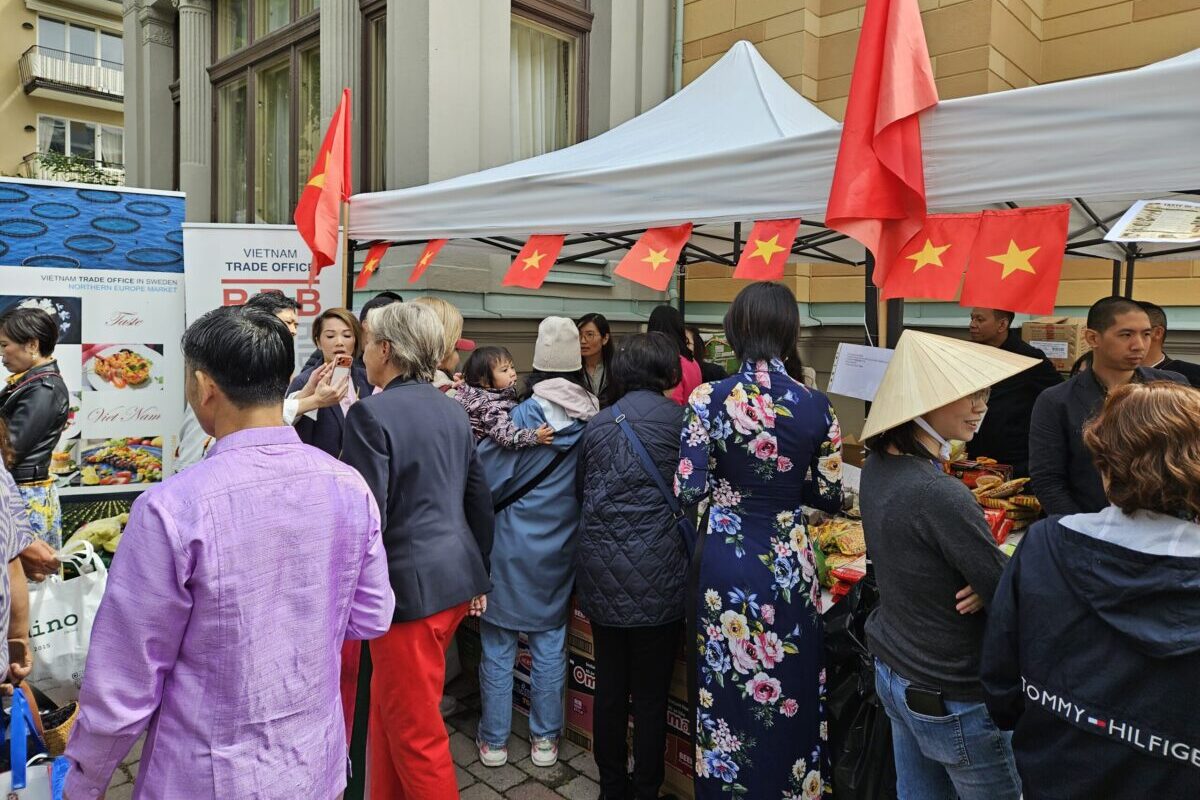
On the occasion of the ASEAN Trade and Food Fair 2026, held in Stockholm on 14 June 2026, the Embassy of Viet Nam in Sweden, in coordination with Vietnamese associations in Sweden, participated in the event with three main showcase areas: culture, cuisine and trade. Among these, the trade booth, managed by the Vietnam Trade Office in Sweden, focused on promoting agricultural products, processed foods and typical Vietnamese export goods.
A reporter from the Industry and Trade Newspaper spoke with Ms Nguyen Thi Hoang Thuy, Vietnam Trade Counsellor in Sweden, about the significance of Viet Nam’s trade booth at ASEAN Fair 2026 and opportunities to connect Vietnamese products with the Swedish and Nordic markets.
Reporter: Could you tell us the main highlights of Viet Nam’s participation in ASEAN Fair 2026 in Stockholm?
Ms Nguyen Thi Hoang Thuy:
This year, Viet Nam participated in ASEAN Fair 2026 with three main showcase areas: a cultural booth, a food booth and a trade booth. This comprehensive approach enabled international friends not only to experience Vietnamese cultural identity and cuisine, but also to directly access Viet Nam’s typical export products.
The trade booth, managed by the Vietnam Trade Office in Sweden, focused on introducing agricultural products, processed foods, spices, beverages and several traditional specialties. Through this booth, we hoped to bring Vietnamese products closer to consumers, importers, distributors, restaurants and partners in Sweden as well as the wider Nordic region.
Reporter: What product groups were highlighted at Viet Nam’s trade booth this year?
Ms Nguyen Thi Hoang Thuy:
Viet Nam’s trade booth introduced a diverse range of products with strong export potential, reflecting the characteristics of Viet Nam’s tropical agriculture and rich culinary culture.
One of the key product groups was Vietnamese rice, including ST25 rice, Vietnamese sushi rice, red rice, purple brown rice, upland sticky rice and “nep cai hoa vang” sticky rice. For the Nordic market, we particularly emphasized the healthy, natural and nutritious qualities of rice varieties such as brown rice, red rice and purple brown rice. These products align well with the growing interest among Swedish and Nordic consumers in whole grains, high-fiber foods, balanced diets and products with clear origins.
In addition to rice, the booth also presented many products closely associated with Vietnamese kitchens and culinary life, such as rice vermicelli, pho noodles, glass noodles and dried red rice noodles; characteristic condiments including Viet Huong fish sauce, Phu Quoc fish sauce, soy sauce, chili sauce, seasoning powder and bouillon powder; as well as Tan Cuong green tea from Thai Nguyen and Vietnamese coffee. These products carry not only commercial value, but also help recreate part of Viet Nam’s culinary identity, from family meals and street food to tea and coffee culture.
The booth also introduced several traditional specialties such as fermented rice starter, Hanoi shrimp paste, pickled eggplants, “banh gai”, sticky rice dumplings with mung bean filling, lotus seed sweet soup, black sticky rice sweet soup, green dracontomelon soaked in sugar, frozen Hai Phong breadsticks and green-skinned pomelo. These products helped visitors better appreciate the richness and diversity of Vietnamese flavors, while opening opportunities for regional specialties to gradually reach the Vietnamese community, local consumers and Asian food distribution channels in Sweden.
Reporter: In your view, what are the opportunities for Vietnamese agricultural products and food in the Swedish and Nordic markets?
Ms Nguyen Thi Hoang Thuy:
Sweden and the Nordic countries are markets with high requirements for quality, food safety, transparency, sustainability and social responsibility. This is a challenge, but also an opportunity for Vietnamese products if businesses adopt a well-structured market approach.
Nordic consumers are increasingly interested in Asian cuisine, natural and healthy products, clear origins and distinctive cultural stories. This creates advantages for many Vietnamese products such as nutritious rice, coffee, tea, spices, tropical fruits and processed foods.
In addition, the Vietnamese community in Sweden serves as an important bridge, helping maintain demand for Vietnamese products while introducing Vietnamese cuisine and goods to local consumers through restaurants, food stores, cultural events and community activities.
Reporter: What should Vietnamese enterprises keep in mind when seeking to enter the Nordic market?
Ms Nguyen Thi Hoang Thuy:
The most important point is that enterprises must fully comply with EU standards and regulations, especially those relating to food safety, traceability, labeling, packaging, certification and quality control. The Nordic market is not only concerned with taste or competitive pricing, but also requires transparency, consistency and professionalism.
Enterprises also need to invest more in packaging, brand storytelling and English-language product materials. Many Vietnamese products are of good quality, but their presentation, product information and brand image are not yet fully aligned with Nordic consumer preferences.
In addition, companies need an appropriate market entry roadmap. Some products may begin with Asian grocery stores, Vietnamese restaurants and community channels, before gradually expanding into larger distribution systems. In this market, persistence, stable quality and the ability to build trust with partners are very important factors.
Reporter: What are your expectations for Viet Nam’s trade booth at ASEAN Fair 2026?
Ms Nguyen Thi Hoang Thuy:
We expect Viet Nam’s trade booth at ASEAN Fair 2026 to help raise the visibility of Vietnamese products in Sweden and the Nordic region. This is an opportunity for consumers, importers, distributors and local partners to have more direct access to Vietnamese goods, thereby gaining a better understanding of the quality, diversity and potential of Vietnamese products.
The fair is also an opportunity for the Trade Office to gather market feedback, better understand consumer preferences and connect with partners interested in Vietnamese supply sources. A major contract may not necessarily be signed immediately after one event, but each meeting, each positive response and each expression of interest from partners is a necessary step toward strengthening the presence of Vietnamese goods in the Nordic market.
In the long term, we hope Vietnamese products will be known not only for their competitive prices, but also for their quality, identity, health benefits, professionalism and the cultural story behind each product.
Thank you very much.