
BUY VIETNAM THIS MONTH
Gavico, rice noodles and vermicelli
AKT, packaging
Latka, kitchen accessories
GDFood, food
Minh Ha, food
AVFood, food
HEADLINES
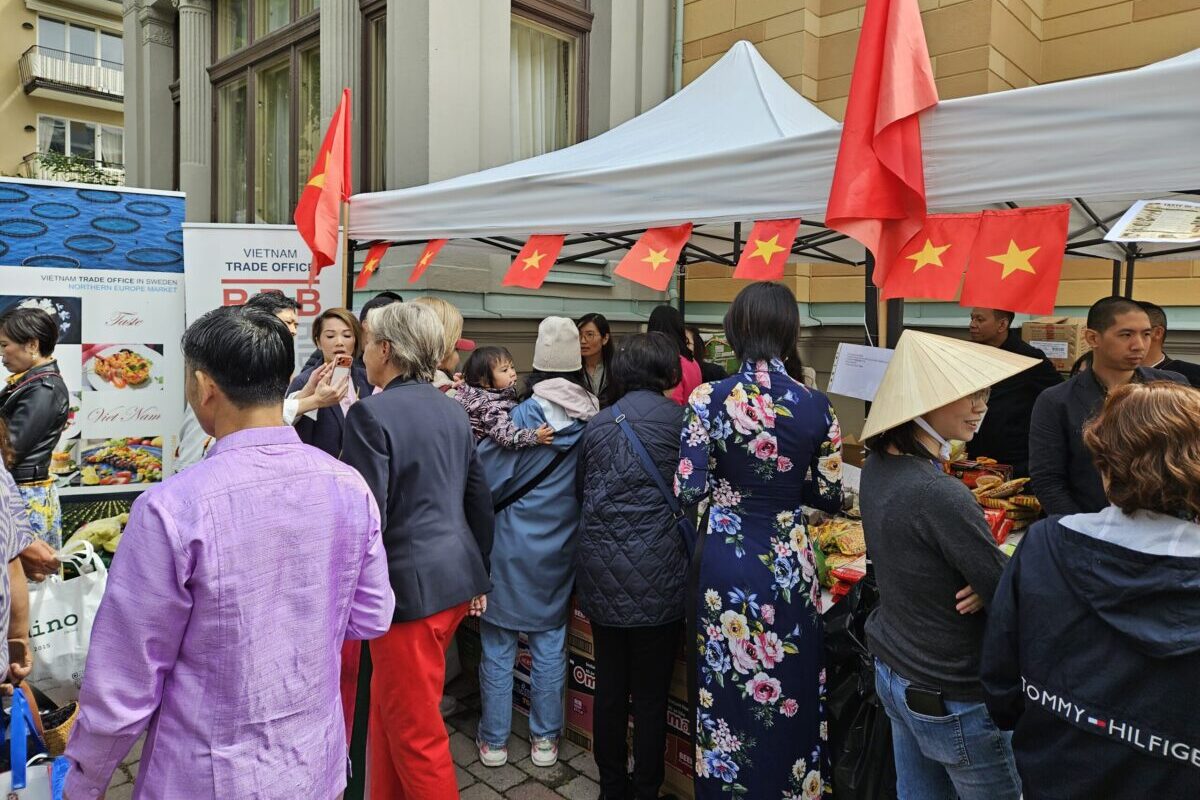
On the occasion of the ASEAN Trade and Food Fair 2026, held in Stockholm on 14 June 2026, the Embassy of Viet Nam in Sweden, in coordination with Vietnamese associations in Sweden, participated in the event with three main showcase areas: culture, cuisine and trade. Among these, the trade booth, managed by the Vietnam Trade Office in Sweden, focused on promoting agricultural products, processed foods and typical Vietnamese export goods.
A reporter from the Industry and Trade Newspaper spoke with Ms Nguyen Thi Hoang Thuy, Vietnam Trade Counsellor in Sweden, about the significance of Viet Nam’s trade booth at ASEAN Fair 2026 and opportunities to connect Vietnamese products with the Swedish and Nordic markets.
Reporter: Could you tell us the main highlights of Viet Nam’s participation in ASEAN Fair 2026 in Stockholm?
Ms Nguyen Thi Hoang Thuy:
This year, Viet Nam participated in ASEAN Fair 2026 with three main showcase areas: a cultural booth, a food booth and a trade booth. This comprehensive approach enabled international friends not only to experience Vietnamese cultural identity and cuisine, but also to directly access Viet Nam’s typical export products.
The trade booth, managed by the Vietnam Trade Office in Sweden, focused on introducing agricultural products, processed foods, spices, beverages and several traditional specialties. Through this booth, we hoped to bring Vietnamese products closer to consumers, importers, distributors, restaurants and partners in Sweden as well as the wider Nordic region.
Reporter: What product groups were highlighted at Viet Nam’s trade booth this year?
Ms Nguyen Thi Hoang Thuy:
Viet Nam’s trade booth introduced a diverse range of products with strong export potential, reflecting the characteristics of Viet Nam’s tropical agriculture and rich culinary culture.
One of the key product groups was Vietnamese rice, including ST25 rice, Vietnamese sushi rice, red rice, purple brown rice, upland sticky rice and “nep cai hoa vang” sticky rice. For the Nordic market, we particularly emphasized the healthy, natural and nutritious qualities of rice varieties such as brown rice, red rice and purple brown rice. These products align well with the growing interest among Swedish and Nordic consumers in whole grains, high-fiber foods, balanced diets and products with clear origins.
In addition to rice, the booth also presented many products closely associated with Vietnamese kitchens and culinary life, such as rice vermicelli, pho noodles, glass noodles and dried red rice noodles; characteristic condiments including Viet Huong fish sauce, Phu Quoc fish sauce, soy sauce, chili sauce, seasoning powder and bouillon powder; as well as Tan Cuong green tea from Thai Nguyen and Vietnamese coffee. These products carry not only commercial value, but also help recreate part of Viet Nam’s culinary identity, from family meals and street food to tea and coffee culture.
The booth also introduced several traditional specialties such as fermented rice starter, Hanoi shrimp paste, pickled eggplants, “banh gai”, sticky rice dumplings with mung bean filling, lotus seed sweet soup, black sticky rice sweet soup, green dracontomelon soaked in sugar, frozen Hai Phong breadsticks and green-skinned pomelo. These products helped visitors better appreciate the richness and diversity of Vietnamese flavors, while opening opportunities for regional specialties to gradually reach the Vietnamese community, local consumers and Asian food distribution channels in Sweden.
Reporter: In your view, what are the opportunities for Vietnamese agricultural products and food in the Swedish and Nordic markets?
Ms Nguyen Thi Hoang Thuy:
Sweden and the Nordic countries are markets with high requirements for quality, food safety, transparency, sustainability and social responsibility. This is a challenge, but also an opportunity for Vietnamese products if businesses adopt a well-structured market approach.
Nordic consumers are increasingly interested in Asian cuisine, natural and healthy products, clear origins and distinctive cultural stories. This creates advantages for many Vietnamese products such as nutritious rice, coffee, tea, spices, tropical fruits and processed foods.
In addition, the Vietnamese community in Sweden serves as an important bridge, helping maintain demand for Vietnamese products while introducing Vietnamese cuisine and goods to local consumers through restaurants, food stores, cultural events and community activities.
Reporter: What should Vietnamese enterprises keep in mind when seeking to enter the Nordic market?
Ms Nguyen Thi Hoang Thuy:
The most important point is that enterprises must fully comply with EU standards and regulations, especially those relating to food safety, traceability, labeling, packaging, certification and quality control. The Nordic market is not only concerned with taste or competitive pricing, but also requires transparency, consistency and professionalism.
Enterprises also need to invest more in packaging, brand storytelling and English-language product materials. Many Vietnamese products are of good quality, but their presentation, product information and brand image are not yet fully aligned with Nordic consumer preferences.
In addition, companies need an appropriate market entry roadmap. Some products may begin with Asian grocery stores, Vietnamese restaurants and community channels, before gradually expanding into larger distribution systems. In this market, persistence, stable quality and the ability to build trust with partners are very important factors.
Reporter: What are your expectations for Viet Nam’s trade booth at ASEAN Fair 2026?
Ms Nguyen Thi Hoang Thuy:
We expect Viet Nam’s trade booth at ASEAN Fair 2026 to help raise the visibility of Vietnamese products in Sweden and the Nordic region. This is an opportunity for consumers, importers, distributors and local partners to have more direct access to Vietnamese goods, thereby gaining a better understanding of the quality, diversity and potential of Vietnamese products.
The fair is also an opportunity for the Trade Office to gather market feedback, better understand consumer preferences and connect with partners interested in Vietnamese supply sources. A major contract may not necessarily be signed immediately after one event, but each meeting, each positive response and each expression of interest from partners is a necessary step toward strengthening the presence of Vietnamese goods in the Nordic market.
In the long term, we hope Vietnamese products will be known not only for their competitive prices, but also for their quality, identity, health benefits, professionalism and the cultural story behind each product.
Thank you very much.
OTHER NEWS
Sweden imported from Vietnam
| Products | 12M/2024 | 12M/2025 | Change (%) |
|---|---|---|---|
| All products (USD) | 1,045,433,214 | 1,310,599,422 | 25 |
| Fish and crustaceans, molluscs and other aquatic invertebrates | 22,081,635 | 34,327,794 | 55.5 |
| Plastic products | 20,996,659 | 19,334,609 | -7.9 |
| Rubber | 608,125 | 532,930 | -12.4 |
| Bags, purses, suitcases, hats, umbrellas | 30,291,549 | 28,589,269 | -5.6 |
| Products of rattan, bamboo, sedge and carpet | 9,734,672 | 10,340,111 | 6.2 |
| Wood and articles of wood | 23,289,522 | 30,181,887 | 29.6 |
| Textiles and garments | 103,968,776 | 161,972,288 | 55.8 |
| Footwears, parts of such articles | 68,645,589 | 87,577,338 | 27.6 |
| Materials for textiles and garments, and footwares | 6,291,836 | 4,944,366 | -21.4 |
| Ceramic products | 2,760,669 | 1,664,580 | -39.7 |
| Articles of iron or steel | 19,815,881 | 60,865,130 | 207.2 |
| Other metals and products | 1,267,667 | 2,432,743 | 91.9 |
| Computers, electrical products, part thereof | 99,772,055 | 164,751,111 | 65.1 |
| Telephone sets, parts thereof | 327,899,421 | 357,863,540 | 9.1 |
| Machinery, mechanical appliances, equipment, parts thereof | 124,083,771 | 160,270,343 | 29.2 |
| Toys, sports equipment and parts | 10,149,651 | 15,004,555 | 47.8 |
Sweden exported to Vietnam
| Products | 12M/2024 | 12M/2025 | Change (%) |
|---|---|---|---|
| All products (USD) | 425,770,298 | 516,920,817 | 21 |
| Other petroleum products | 2,755,510 | 4,616,935 | 67.6 |
| Chemical products | 12,146,201 | 21,263,564 | 75.1 |
| Pharmaceutical products | 113,414,056 | 156,703,867 | 38.2 |
| Plastic materials | 3,121,639 | 3,160,939 | 1.3 |
| Plastic products | 6,794,108 | 7,397,649 | 8.9 |
| Wood and articles of wood | 5,258,624 | 4,858,787 | -7.6 |
| Paper products | 41,541,128 | 59,818,820 | 44 |
| Iron or steel | 14,555,489 | 19,447,848 | 33.6 |
| Articles of iron or steel | 7,959,582 | 16,315,734 | 105 |
| Computers, electrical products, part thereof | 5,771,947 | 5,443,772 | -5.7 |
| Telephone sets, parts thereof | 63,265 | 32,891 | -48 |
| Other machinery, equipment, tools and spare parts | 143,689,639 | 141,406,376 | -1.6 |
| Other commodity | 68,699,109 | 76,413,233 | 11.2 |
Denmark imported from Vietnam
| Products | 12M/2024 | 12M/2025 | Change (%) |
|---|---|---|---|
| All products (USD) | 444,446,340 | 426,533,637 | -4 |
| Fish and crustaceans, molluscs and other aquatic invertebrates | 50,878,475 | 49,627,880 | -2.5 |
| Coffee | 3,937,131 | 8,250,534 | 109.6 |
| Plastic products | 26,260,335 | 24,631,705 | -6.2 |
| Bags, purses, suitcases, hats, umbrellas | 15,551,591 | 11,933,275 | -23.3 |
| Products of rattan, bamboo, sedge and carpet | 6,982,180 | 7,476,288 | 7.1 |
| Wood and articles of wood | 35,938,551 | 33,620,894 | -6.4 |
| Textiles and garments | 67,763,533 | 60,214,449 | -11.1 |
| Footwears, parts of such articles | 22,435,889 | 27,326,693 | 21.8 |
| Ceramic products | 4,817,634 | 6,534,622 | 35.6 |
| Articles of iron or steel | 47,203,752 | 33,766,801 | -28.5 |
| Other machinery, equipment, tools and spare parts | 22,402,507 | 33,827,564 | 51 |
| Electric wires and cables | 30,752,365 | 29,977,243 | -2.5 |
| Transport vehicles and spare parts | 6,619,950 | 8,329,052 | 25.8 |
| Furniture products from materials other than wood | 27,681,016 | 23,444,675 | -15.3 |
| Toys, sports equipment and parts | 5,422,161 | 8,214,292 | 51.5 |
Denmark exported to Vietnam
| Products | 12M/2024 | 12M/2025 | Change (%) |
|---|---|---|---|
| All products (USD) | 231,905,503 | 294,433,435 | 27 |
| Fish and crustaceans, molluscs and other aquatic invertebrates | 10,065,040 | 22,445,177 | 123 |
| Milk and dairy products | 5,225,430 | 7,782,003 | 48.9 |
| Other food preparations | 11,753,358 | 12,775,670 | 8,69 |
| Chemical products | 24,958,641 | 28,592,645 | 14.6 |
| Pharmaceutical products | 21,788,350 | 28,608,208 | 31.3 |
| Plastic products | 11,422,324 | 16,489,856 | 44.4 |
| Materials for textiles and garments, and footwares | 303,555 | 721,694 | 137.7 |
| Iron or steel | 189,081 | 113,262 | -40.1 |
| Articles of iron or steel | 6,629,707 | 9,935,980 | 49.9 |
| Computers, electrical products, part thereof | 5,395,394 | 6,558,485 | 21.6 |
| Other machinery, equipment. tools and spare parts | 72,829,043 | 89,383,708 | 22.7 |
| Electric wires and cables | 2,601,897 | 3,074,758 | 18.2 |
| Other commodity | 58,743,684 | 67,951,989 | 15.7 |
Norway imported from Vietnam
| Products | 12M/2024 | 12M/2025 | Change (%) |
|---|---|---|---|
| All products (USD) | 136,784,040 | 214,498,119 | 57 |
| Fish and crustaceans, molluscs and other aquatic invertebrates | 9,469,013 | 18,478,742 | 95.1 |
| Fruits and vegetables | 3,386,075 | 4,416,359 | 30.4 |
| Cashew nuts | 8,161,405 | 10,944,323 | 34.1 |
| Plastic products | 2,851,506 | 2,857,887 | 0.2 |
| Bags, purses, suitcases, hats, umbrellas | 7,607,622 | 9,396,323 | 23.5 |
| Wood and articles of wood | 2,852,790 | 2,872,388 | 0.7 |
| Textiles and garments | 10,891,128 | 14,513,414 | 33.3 |
| Footwears, parts of such articles | 20,724,706 | 21,248,206 | 2.5 |
| Articles of iron or steel | 1,370,943 | 1,366,439 | -0.3 |
| Cameras, camcorders and components | 5,475,822 | 11,149,570 | 103.6 |
| Other machinery, equipment, tools and spare parts | 14,182,660 | 19,768,146 | 39.4 |
| Transport vehicles and spare parts | 8,666,926 | 40,284,446 | 364.8 |
| Furniture products from materials other than wood | 3,245,785 | 2,582,318 | -20.4 |
Norway exported to Vietnam
| Products | 12M/2024 | 12M/2025 | Change (%) |
|---|---|---|---|
| All products (USD) | 516,969,886 | 640,679,985 | 23.9 |
| Fish and crustaceans, molluscs and other aquatic invertebrates | 320,960,009 | 393,811,947 | 22.7 |
| Chemical products | 4,847,743 | 4,913,621 | 1.4 |
| Fertilizers | 39,939,218 | 41,454,370 | 3.8 |
| Articles of iron or steel | 8,450,183 | 9,999,353 | 18.3 |
| Other machinery, equipment. tools and spare parts | 79,171,034 | 119,476,143 | 50.9 |
| Other commodity | 63,601,699 | 71,024,552 | 11.7 |
OTHER NEWS
Việt Nam launches domestic carbon exchange to advance net-zero goal
Việt Nam officially launched its domestic carbon exchange at the Hanoi Stock Exchange (HNX) on Monday, marking a major milestone in the country’s efforts to establish a carbon market and accelerate its transition to a low-carbon economy.
The exchange is expected to provide a market-based mechanism for reducing greenhouse gas emissions, encouraging green investment and helping Việt Nam fulfil its commitment to achieving net-zero emissions by 2050.
The launch is part of the Government’s roadmap for developing a national carbon market under Decision 232/QĐ-TTg and follows the regulatory framework established by Decree 06/2022/NĐ-CP on greenhouse gas emissions reduction and ozone layer protection.
Speaking at the inauguration ceremony, HNX Chairman Nguyễn Anh Phong said the exchange was the result of close coordination among the Vietnam Exchange, the State Securities Commission, the Department of Climate Change, the Vietnam Securities Depository and Clearing Corporation (VSDC), the Bank for Investment and Development of Vietnam (BIDV), and other relevant agencies.
He said the legal framework, operational regulations, and registration, trading and settlement systems had been fully developed, while the technology infrastructure linking HNX, VSDC, the Department of Climate Change and BIDV had been successfully tested and was ready for operation.
The market will initially have six qualified securities firms as trading members and more than 100 major emitters eligible to receive emissions allowances.
“The launch of the carbon exchange is not merely a technical milestone,” Phong said. “It establishes a mechanism that links environmental responsibility with business interests, enabling companies to optimise the cost of emissions reduction through the trading of emissions allowances and carbon credits while encouraging technological innovation and sustainable growth.”
He added that HNX would continue working with relevant agencies to ensure the market operates safely, efficiently and transparently, while encouraging more businesses and organisations to participate.
State Securities Commission Chairwoman Vũ Thị Chân Phương described the launch as a significant step in strengthening Việt Nam’s modern market economy and expanding the country’s green financial ecosystem.
As climate change presents growing challenges worldwide, green growth, the circular economy and sustainable development have become global priorities, she said.
“The carbon exchange creates a transparent and fair platform for trading greenhouse gas emissions allowances and carbon credits,” she said. “It also serves as an economic tool to encourage businesses to improve production efficiency, adopt cleaner technologies and reduce emissions.”
She noted that the exchange would also support the development of green finance by creating a new channel for mobilising capital for sustainable projects, while aligning Việt Nam’s financial and environmental markets more closely with international practices.
According to Phương, legal regulations, technology infrastructure, operational procedures and inter-agency coordination mechanisms have now been largely completed following extensive preparations by the Ministry of Finance, the Ministry of Agriculture and Environment and other stakeholders.
To encourage participation during the pilot phase through the end of 2028, the Government has issued Decree 29/2026/NĐ-CP, exempting businesses from transaction fees on the domestic carbon exchange.
She said the policy demonstrates the Government’s commitment to supporting businesses by lowering participation costs and encouraging greater investment in emission reduction, technological innovation and sustainable development.
Phương also called on market operators to ensure the smooth and secure operation of the trading platform, strengthen market surveillance, prevent manipulation and fraud, and continue raising awareness among businesses while drawing on international experience to further improve the market framework.
Representing the market operators, Vietnam Exchange Chairman Lương Hải Sinh pledged to ensure the exchange operates safely, securely and transparently in accordance with the law.
He said operators would continue working closely with the Ministry of Agriculture and Environment and other authorities to refine operational procedures, strengthen market oversight, improve intermediary capacity and promptly address challenges arising during implementation.
“The launch marks an important milestone for both Việt Nam’s financial market and its carbon market,” Sinh said. “However, this is only the beginning.”
He said market operators would continue coordinating with regulators and the business community to develop a transparent, efficient and sustainable carbon market that supports green growth, enhances national competitiveness and contributes to Việt Nam’s net-zero commitment by 2050. — VNS
Green shipping boom offers chance to rebuild shipbuilding industry
A decade after a painful restructuring that left much of its shipbuilding industry struggling to stay afloat, Việt Nam is finding itself back in the global spotlight.
As shipping companies race to replace ageing fleets with greener vessels and manufacturers seek alternatives to traditional supply chains, a rare window of opportunity is opening for the country to rebuild its position in one of the world’s most strategic industries.
Việt Nam climbed to fourth place globally in commercial shipbuilding capacity in 2024, up three places from a decade earlier. While its share of global output remains modest at about 1 per cent, industry experts say the next five to seven years could determine whether the country emerges as a significant regional shipbuilding centre or remains a marginal player in a rapidly changing market.
“The current favourable cycle for the global shipbuilding industry could last until 2030-32,” said Vũ Hữu Chiến, general director of Phà Rừng Shipbuilding Company.
“The opportunity is open but will not remain open indefinitely.”
Global shipbuilding is entering a new growth phase driven by fleet renewal, decarbonisation requirements and the adoption of digital technologies.
Industry estimates show that orders placed between early 2024 and mid-2026 were equivalent to about 12 per cent of the world’s commercial fleet with total contract value rising by around 20 per cent. Major shipyards in China, South Korea and Japan are reportedly booked through 2027 and 2028.
More than 60 per cent of new shipbuilding demand between 2024-33 is expected to come from replacing ageing vessels and complying with stricter environmental regulations, while demand is also increasing for ships powered by alternative fuels and vessels supporting offshore wind projects.
Global shift
According to the Vietnam Maritime and Waterways Administration (VMWA), countries around the world are accelerating the transition toward green shipping as they pursue net-zero emissions goals by 2050. Several nations have set targets to become green shipbuilding hubs by 2030 and aim to operate domestic fleets powered entirely by clean energy by mid-century.
Nguyễn Tiến Đạt, deputy general director of the Shipbuilding Industry Corporation (SBIC), said the global shipbuilding market was projected to reach about US$195 billion by 2030, up from its current value of US$150-180 billion.
“The growing adoption of clean-fuel vessels, smart ships and floating infrastructure supporting the marine economy is creating substantial opportunities for Việt Nam’s shipbuilding industry, provided there is a long-term and well-planned investment strategy,” Đạt said.
The shipbuilding industry is also seeing growing demand at home as Việt Nam implements its maritime economic development strategy through 2045.
Lê Đỗ Mười, director of the VMWA, said the country’s relatively old fleet would require extensive modernisation in the coming years.
“Shipbuilding needs to be restored, restructured and elevated into a major economic sector, focusing on the construction and repair of high-value vessels and specialised ships serving the marine economy, national defence and security,” Mười said.
Việt Nam has established a roadmap for the green energy transition in the transport sector which encourages investment in vessels powered by clean fuels during 2022-30 and aims to convert the entire domestic fleet to green energy between 2031 and 2050.
It is estimated that demand for newbuilds and replacement vessels for the Vietnamese merchant fleet will reach about 4-5 million deadweight tonnes (DWT) between now and 2030.
Strategic industry
The industry’s long-term prospects will increasingly depend on its ability to participate in the global transition toward low-carbon shipping.
Phạm Hoài Chung, deputy president of the Vietnam Shipbuilding Industry Association (VISIA), said shipbuilding should increasingly be viewed as a strategic industry rather than a traditional heavy manufacturing sector.
Citing estimates from the United Nations Conference on Trade and Development, Chung noted that 80-90 per cent of global trade by volume is transported by sea, while around 90 per cent of Việt Nam’s international trade depends on maritime transport.
“Countries with strong shipping and shipbuilding capabilities enjoy significant advantages in trade, logistics, energy security and economic resilience,” he said.
Chung warned that without long-term industrial policies and institutional reforms, Việt Nam could remain stuck at the lower end of the global value chain despite favourable market conditions.
He pointed out that Việt Nam possesses several advantages, including its location along one of the world’s busiest maritime routes, a coastline stretching more than 3,260 kilometres, an exclusive economic zone of more than one million square kilometres and a robust port infrastructure system.
As Việt Nam pursues ambitious economic growth targets and seeks to lower logistics costs, shipbuilding could become a leading industry that supports the country’s maritime economic development strategy and industrialisation goals, Chung said.
However, the industry continues to face significant challenges, including dependence on imported engines and equipment, limited access to long-term financing and shortages of highly skilled workers in areas such as artificial intelligence, automation and new energy technologies.
Chung said Việt Nam should avoid direct competition with China, South Korea and Japan in large, high-technology vessels and instead focus on market segments that better match its industrial capabilities.
He also identified ship repair, retrofitting and upgrading vessels to meet new emissions standards as promising growth areas. Demand for such services is expected to rise rapidly across the Asia-Pacific region as shipping companies seek to comply with increasingly stringent environmental regulations.
He argued that building a stronger local supply chain for materials, equipment and technical services would be critical if Việt Nam wants to improve competitiveness and capture a larger share of the global market.
Chung said government support through industrial policies, export financing, credit guarantees and technology development programmes would be needed to create a globally competitive shipbuilding industry.
Charting course
Stressing that the global shipbuilding industry is undergoing its most profound transformation in decades, experts say Việt Nam has significant opportunities to become an important shipbuilding centre in Southeast Asia while helping reduce logistics costs and support the maritime economy.
Phạm Quang Tuyến, director general of the Nam Triệu Shipbuilding Company, said that, with a well-planned strategy, the shipbuilding industry, led by companies emerging from the restructuring of SBIC, could fully capitalise on the global green transition and production shift.
“A new chapter for Việt Nam’s shipbuilding industry could begin at the shipyards that once witnessed the rise and fall of Vinashin and SBIC,” Tuyến said.
Experts also called on the government to accelerate the development of a national shipbuilding strategy linked to fleet renewal plans, the green transition and global production.
Nguyễn Văn Thành, vice chairman of the Central Theoretical Council, said the maritime economy was increasingly driven by technology-intensive sectors including artificial intelligence, automation, big data and smart monitoring systems.
“Maritime economic development can no longer rely solely on traditional infrastructure and industries. It increasingly depends on modern marine technology ecosystems, digital maritime data infrastructure and smart governance models,” Thành said.
He added that developing shipbuilding capacity should be viewed as part of a broader strategy to strengthen Việt Nam’s economic resilience, technological self-reliance and maritime competitiveness.
Việt Nam currently has 88 seagoing shipbuilding enterprises and 411 inland waterway vessel builders, including nearly 120 companies capable of building and repairing vessels with deadweight tonnage (DWT) exceeding 1,000 tonnes.
For an industry that has spent more than a decade rebuilding after a period of turbulence, the global shift towards greener shipping and diversified supply chains presents a rare second chance. Whether Việt Nam can transform that opportunity into a lasting position in the international shipbuilding market will depend on the decisions it makes today. – VNS
Government askes faster ODA disbursement to support growth targets
The Government has asked gor more efforts to accelerate the disbursement of official development assistance (ODA) and other concessional foreign loans after spending lagged far behind schedule in the first half of the year.
In a directive signed on May 25, the government said accelerating the disbursement and efficiency of ODA is critical as Việt Nam begins implementing its 2026-30 medium-term public investment plan, with the government seeking to sustain double-digit economic growth while improving the efficiency of public spending.
The Ministry of Finance’s statistics showed that disbursement of foreign-funded public investment had reached just 9.99 per cent of the annual plan by June 15.
Of note, several ministries and localities had failed to make any disbursement in the period, blaming delays in land clearance, procurement, repeated project design revisions and weak project management that have slowed implementation and required changes to investment approvals and loan agreements.
The Government asked ministers, agency heads and provincial leaders to treat ODA management and disbursement as a priority, holding them directly accountable for project selection, implementation and the effective use of foreign loans.
Funding should be prioritised for nationally important infrastructure projects and those with strong economic spillover effects, while rejecting proposals for projects deemed unnecessary, financially unviable or lacking clear funding sources.
Efforts must be hastened to complete investment procedures, ensure adequate counterpart funding, resolve administrative bottlenecks promptly and reallocate capital from slow-moving projects to those capable of faster disbursement.
The Ministry of Finance has been tasked with working with international development partners to simplify and shorten loan disbursement procedures while closely monitoring project implementation and recommending corrective measures for delayed projects. — VNS