H&M Group affirms Vietnam’s critical role in its long-term development strategy—not only as a key production hub, but also as a growing consumer market. In a discussion with the Ministry of Industry and Trade of Vietnam during the Vietnam International Sourcing Fair 2025, the company reiterated its commitment to partnering with Vietnamese suppliers who share its values of sustainability and transparency.
As the global fashion industry shifts rapidly toward circularity, sustainability, and greater responsibility, Vietnam is emerging as a highly attractive sourcing destination—thanks to its diverse production capacity, improving infrastructure, and deepening international integration. In a working session with Vietnam’s Ministry of Industry and Trade, a representative of H&M Group shared strategic insights into the potential for Vietnam to strengthen its role in the global supply chain, outlined key supplier selection criteria, and offered practical recommendations for Vietnamese enterprises seeking to engage more deeply with global fashion retailers.
- How does H&M Group evaluate the role of Vietnam in the global fashion supply chain today? Is Vietnam considered a strategic link in H&M Group’s long-term development strategy, both as a consumer market and a production base?
H&M Response: Vietnam is an important production market for H&M Group, with several advantages such as diverse product capabilities, proximity to major sourcing centers and a strong commitment to sustainable growth and competitiveness. Vietnam’s efforts to localize production – particularly in raw materials and inputs – are aligned with H&M Group’s long-term goals of building a resilient and circular supply chain. Moreover, Vietnam’s active participation in key trade agreements such as EVFTA offers relevant market access, especially to the EU.
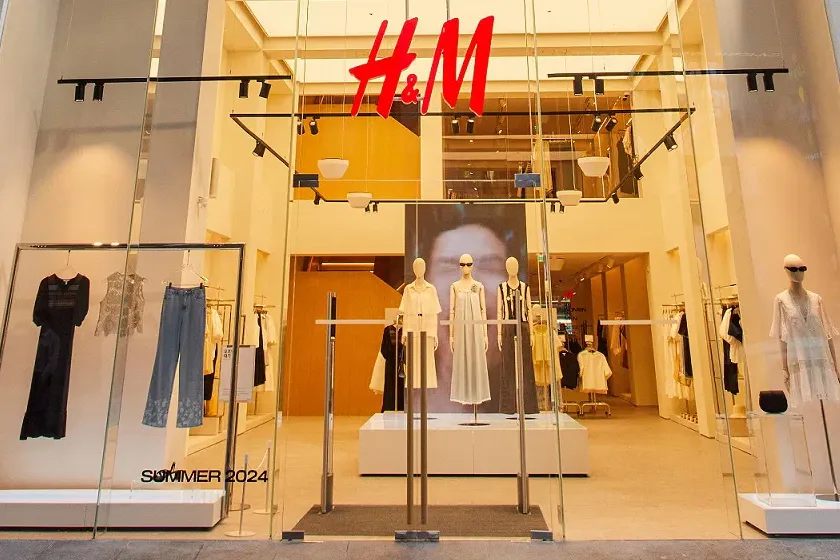
Furthermore, Vietnam is not only a key production base, but also an emerging consumer market, offering potential for future retail expansion. H&M opened its first store in Vietnam in 2017 and has expanded its presence to 14 physical stores and an online sales channel which serves customers across the country. H&M employs more than 300 employees in its stores, offices and distribution centers. These employment opportunities increase with the addition of each new store.
- As H&M Group continues to expand its global sourcing network, what criteria does the company apply when selecting suppliers? For Vietnamese businesses, what specific requirements does H&M Group set regarding production capacity, environmental and social standards (ESG), quality control systems, and compliance with international regulations?
H&M Response: H&M Group applies a rigorous supplier selection process that prioritizes sustainability, transparency and long-term strategic partnerships. Key criteria include production capacity and capability to meet global quality and volume standards, transparency and traceability across the supply chain to meet company and regulatory requirements, and full compliance with environmental and social standards, including H&M Group’s sustainability commitment that describes our requirements on our business partners regarding healthy workplaces, environment and animal welfare. It also outlines how we want to work together with all our business partners to advance sustainability in our value chain.
- At the Vietnam International Sourcing Fair 2025, what types of products or solutions is H&M Group looking to source from Vietnamese companies? In the context of a global shift towards sustainability and eco-friendly consumption, what expectations does H&M Group have for potential Vietnamese partners—particularly in the areas of raw materials, finished fashion products, or green manufacturing?
H&M Response: At H&M Group, sustainability is deeply embedded in all aspects of our business, including how we source products and work with suppliers. As we participate in the Vietnam International Sourcing Fair 2025, we are particularly interested in exploring partnerships with Vietnamese companies that share our values and are committed to driving more sustainable practices in the fashion industry.
In the context of the global shift towards sustainability and more conscious consumption, we are particularly interested in partners who are taking active steps to improve environmental performance, whether through decarbonization measures, responsible use of materials, innovation in product design, or more resource-efficient manufacturing processes.
We also place high importance on transparency, traceability, and fair working conditions across the value chain. We see collaboration as essential to creating meaningful change, and we believe that working closely with suppliers who are aligned on these ambitions will help us accelerate progress toward a more circular fashion future.
- Based on H&M Group’s experience working with suppliers in many countries, what are the key factors that enable a local business to enter the global market, especially in the fashion sector? What specific advice would H&M Group offer to Vietnamese businesses to improve their ability to access, sustain, and meet the high standards required by international retail chains?
H&M Response: H&M Group’s global sourcing experience shows that successful supplier partnerships are built on strong compliance with international labour, environment and social standards, robust production capacity and ability to scale while maintaining quality, transparency and traceability in sourcing and operations, and an openness to innovation, especially in digital traceability, energy efficiency and circular design.
To succeed in today’s global fashion supply chain, suppliers must combine operational excellence with strong climate and renewable energy performance. Our experience shows that brands and regulators alike are rapidly raising expectations on decarbonization, making climate leadership a decisive competitive advantage.
Vietnamese suppliers that commit early to renewable energy adoption, quantified climate targets, and transparent ESG practices will be best placed to secure long term partnerships with H&M Group and other leading retailers.
We also place high importance on transparency, traceability, and fair working conditions across the value chain. We see collaboration as essential to creating meaningful change, and we believe that working closely with suppliers who are aligned on these ambitions will help us accelerate progress toward a more circular fashion future.