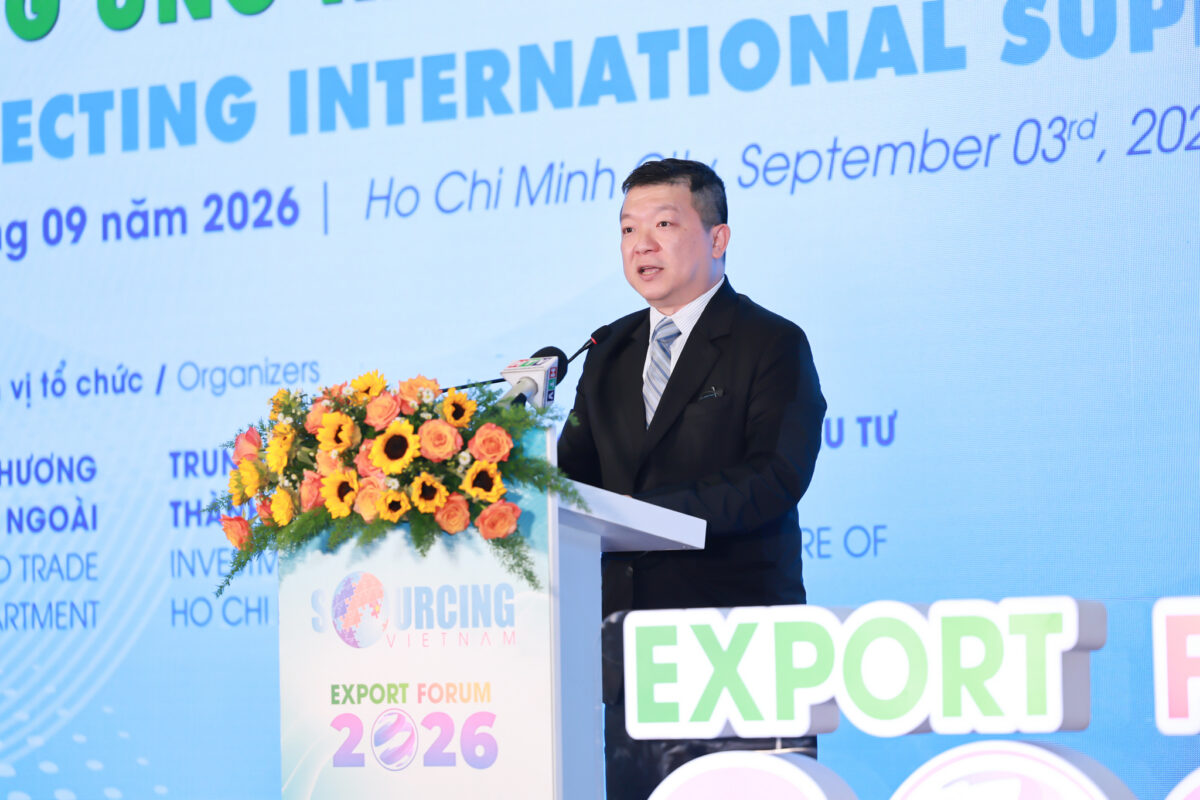
Speaking to a reporter from Industry and Trade Newspaper on the sidelines of Viet Nam International Sourcing 2026, held in Ho Chi Minh City from 3 to 5 September, Alen Wei, Chief Financial Officer (CFO) of H&M Production in China and Southeast Asia, emphasized that Viet Nam is one of H&M’s largest sourcing markets and, in many respects, already a global sourcing hub.
Three key trends for the textile and garment industry
How do you assess global trends in the textile and garment industry, and what advice would you give Viet Nam?
Alen Wei: Viet Nam has been highly successful in textile and garment manufacturing. Looking ahead, three trends will be particularly important for Viet Nam and other countries with strengths in this industry: sustainability, renewable energy and industrial upgrading.
On sustainability, every participant in the supply chain needs to integrate sustainable practices into its operations. Businesses must continually consider how to balance production with reducing their impact on people and the environment.
I have seen many businesses in Viet Nam doing this very well. That gives us a strong foundation for further development.
The second trend is renewable energy. It will become increasingly important as H&M and many other brands place greater emphasis on its use.
The third is industrial upgrading. As we know, Viet Nam has strong manufacturing capabilities across many industries. But labour costs will inevitably rise as the country develops. Industrial upgrading therefore requires improvements in productivity and efficiency.
Viet Nam should look beyond manufacturing alone and consider the entire supply chain. Developing and securing the upstream stages is especially important.
This is an area we need to focus on in the coming years: finding more suppliers and creating conditions for fabric manufacturers to invest and produce in Viet Nam. There are, of course, challenges, including which raw materials businesses use and whether they can import them at a reasonable cost.
If these issues can be addressed, Viet Nam will become a much more attractive sourcing market.
The EVFTA has made Viet Nam a more attractive market
How do you assess Viet Nam’s potential to become a regional and global sourcing hub?
Alen Wei: Viet Nam already plays a very important role as one of H&M’s largest sourcing markets. In many respects, it is already a global sourcing hub.
The textile and garment industry has long been one of Viet Nam’s strengths, so I believe its potential is considerable.
The EU–Viet Nam Free Trade Agreement (EVFTA) has also made Viet Nam a more attractive market, particularly for European brands like ours.
The agreement creates many opportunities. To make the most of them, however, Viet Nam needs a domestic fabric supply chain. I want to emphasize how important it is to develop that supply chain if Viet Nam is to fully benefit from the agreement.
What are H&M’s goals in attending Viet Nam International Sourcing, particularly in finding new suppliers and helping Vietnamese businesses join global supply chains?
Alen Wei: We currently work with 40 suppliers operating around 70 factories in Viet Nam. In terms of factory numbers alone, we are therefore not actively looking to add a large number of new partners.
We are, however, still looking for suitable partners, especially in the upstream stages of the supply chain, as I mentioned earlier. Viet Nam has many garment factories, but its domestic fabric supply chain is not yet fully developed. At present, only around 30% of the fabric we use is sourced in Viet Nam.
Thank you for speaking with us.