
At a socio-economic press briefing on Thursday, the municipal Department of Finance said the two are among the major newly licensed projects contributing to the city’s FDI inflows since the beginning of the year.
According to the department, total registered foreign investment in Ho Chi Minh City as of September 19 was 4.19 times the figure recorded during the same period last year and equivalent to 156.6 percent of the full-year target.
The city granted investment registration certificates to 1,438 new projects with a total registered capital of $9.358 billion.
A total of 225 existing projects registered capital increases, with net additional investment of $4.927 billion, while 1,450 cases of capital contribution and share or stake purchases were recorded, totaling $2.94 billion.
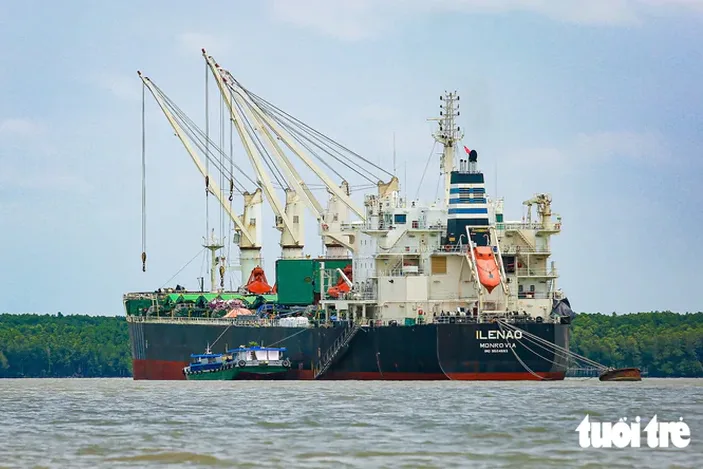
The Can Gio International Transshipment Port is a major project in port infrastructure and logistics. It is expected to increase Vietnam’s capacity for international cargo transshipment while expanding maritime connectivity and supporting logistics, trade, transport and related industries.
The AI Factory project is part of the city’s digital infrastructure and artificial intelligence sector. It is expected to add computing, data storage and processing capacity for AI applications, digital transformation and innovation.
Separately, investors have proposed additional investment of around $2.8 billion in an international university urban development project and about $1.4 billion in a smart complex project in the Thu Thiem New Urban Area.
The Department of Finance said Ho Chi Minh City would continue working to resolve procedural and implementation obstacles and support existing investors in expanding their operations.
The city will also promote links between FDI enterprises and domestic companies in the supply of goods and services and workforce training.
For the full year, registered foreign investment in Ho Chi Minh City is projected to reach around $19 billion, equivalent to 172.7 percent of the annual target.