
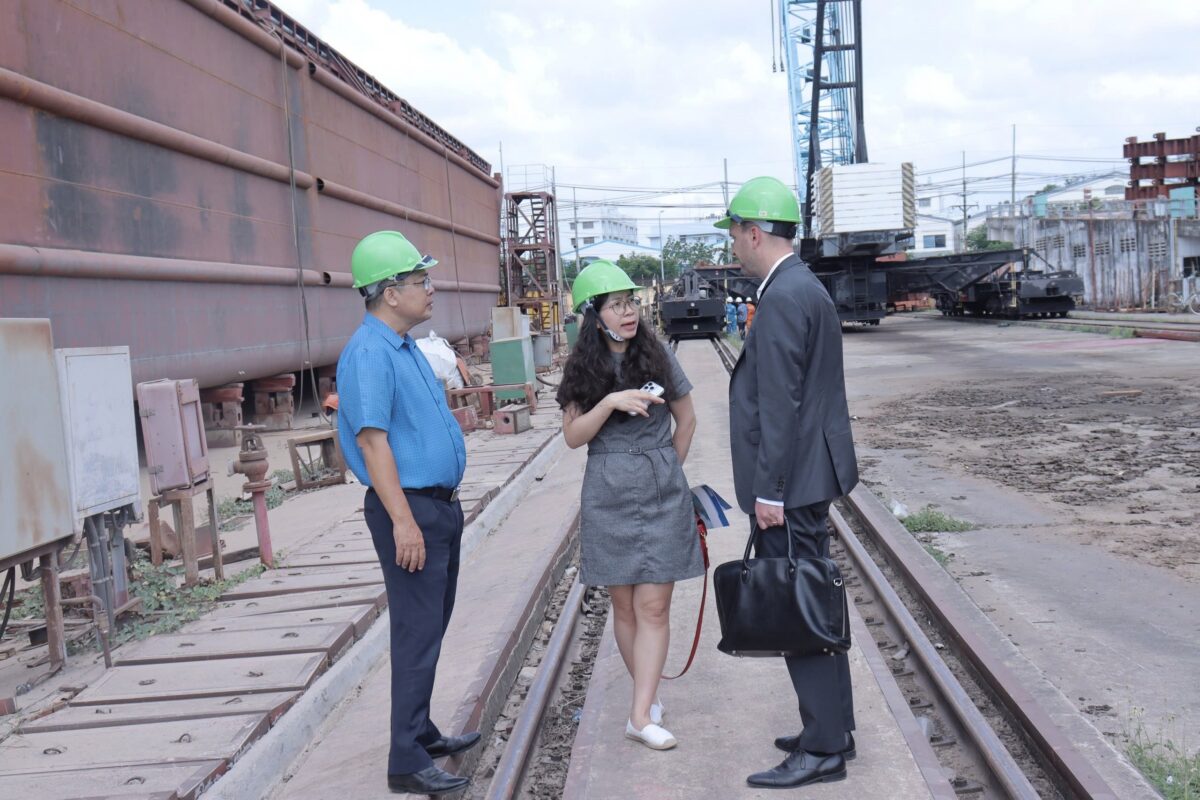
As part of Viet Nam International Sourcing 2026 (VIS 2026), maritime brokerage and services group Clarksons met with shipbuilding companies and shipyards in Ho Chi Minh City and Hai Phong to identify potential partners for its Nordic and Baltic clients.
From 3 to 9 September 2026, alongside its participation in VIS 2026 in Ho Chi Minh City, the Clarksons delegation assessed Viet Nam’s capacity for ship construction and repair, as well as opportunities for cooperation.
According to Clarksons representatives, demand from the clients it serves currently centres on two types of vessel: medium sized tankers of approximately 10,000–25,000 deadweight tonnes (DWT), and roll-on/roll-off passenger ferries (RoPax) with capacity for 1,000–3,000 passengers and 1,000–4,000 lane metres of vehicles.
Because most of these clients operate in the Baltic Sea region, the vessels must meet demanding requirements for ice class, safety and operation in the climatic conditions of Northern Europe. European firms such as FKAB and Deltamarin typically design the vessels. Clarksons also presented examples of projects built in China, including Vinga-class tankers for Swedish clients and the RoPax vessel Viking Glory for Finland’s Viking Line.
At the VIS 2026 business-to-business meetings, Clarksons met directly with Song Thu Shipbuilding Company Limited and Company 198. Discussions focused on their ship construction and repair capabilities, facilities, technical teams, product portfolios and ability to fulfil orders with demanding technical specifications.
The Vietnamese companies presented their experience, production capacity and development plans, and discussed the specific requirements of Nordic and Baltic clients with Clarksons. The parties identified several potential areas for cooperation and agreed to continue discussions after the event.
Alongside VIS 2026, the Clarksons delegation met with the Shipbuilding Industry Corporation (SBIC) and visited Ba Son Shipyard and Minh Viet Shipbuilding Company in southern Viet Nam. It also visited Khien Ha Shipyard and Hoang Gia Shipyard in Hai Phong.
These companies have experience in ship construction, repair and fabrication, supported by shipyard facilities, docks, engineers and skilled workers. Ba Son has extensive experience building and repairing military and commercial vessels; SBIC has a network of shipbuilding facilities across Viet Nam; and Minh Viet, Khien Ha and Hoang Gia have participated in projects involving vessels with demanding technical requirements.
During the meetings, Clarksons and the Vietnamese companies discussed vessel types and dimensions, technical standards, ice class, quality requirements and delivery schedules. Clarksons expressed interest in being introduced to suitable shipyards so it could assess their capacity for individual projects.
According to Clarksons, Viet Nam has several strengths that support the development of its shipbuilding industry, including technical personnel, skilled workers, production capacity and government support for the sector. These conditions could help Vietnamese companies gradually secure orders for specialised vessels, including ships designed to operate in harsh climates, and participate more deeply in international maritime supply chains.
Clarksons’ activities at VIS 2026 demonstrate that the event creates connections beyond the sourcing of goods, extending into higher-value industrial and service sectors. Through business meetings and shipyard visits, Vietnamese shipbuilders had opportunities to engage directly with international brokers and European clients, opening prospects for long-term cooperation with Nordic and Baltic markets.
Viet Nam Trade Office in Sweden, which also covers Denmark, Norway, Iceland and Latvia