BUY VIETNAM THIS MONTH
Sao Mai, textiles and garments
Grando, aluminium
Lagom, recycled products
Boss Group, aluminum and metal construction products
Carilas, fruits & juice
Bie, aluminum
Havigo, dried fruits
Megahome, household goods
Lavite, foods and health supplements
Viet Phap, aluminium
Viet Y, aluminium
HEADLINES
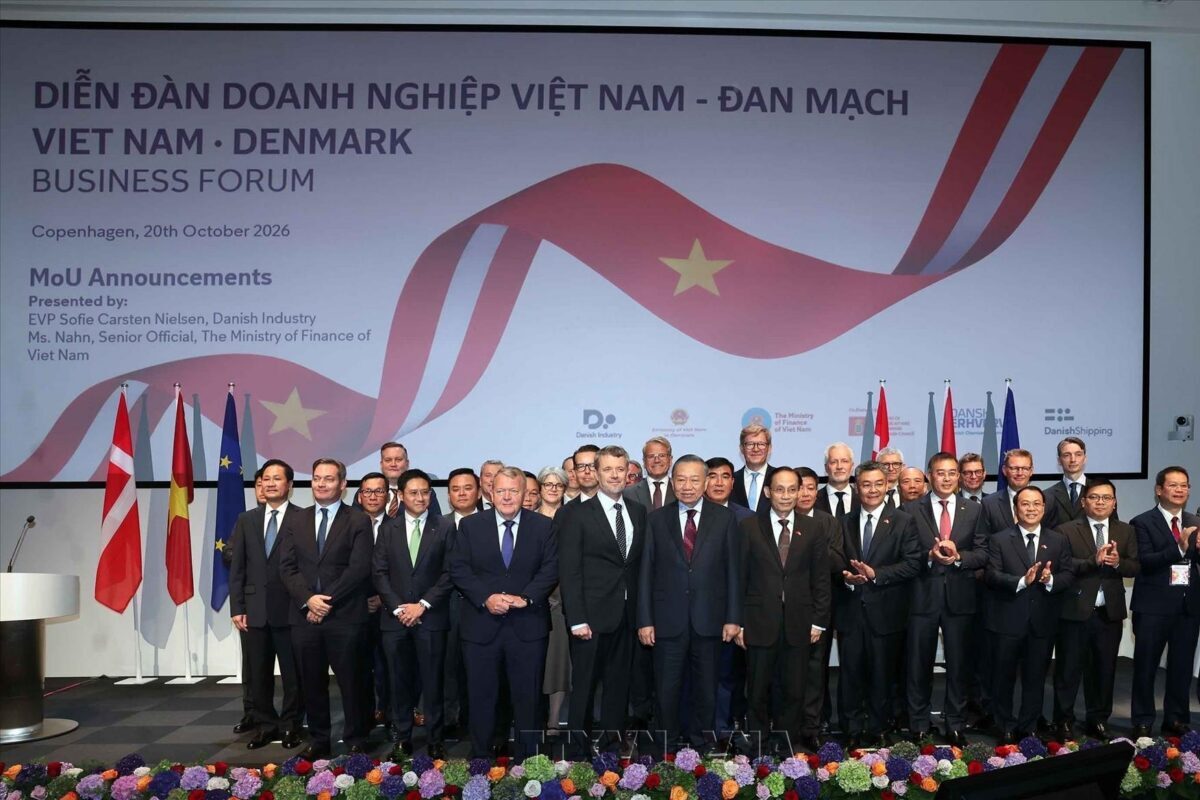
As part of his State visit to the Kingdom of Denmark, General Secretary of the Communist Party of Vietnam and President of the Socialist Republic of Vietnam To Lam attended the Vietnam–Denmark Business Forum in Copenhagen on the morning of October 20 (local time).
The Forum was also attended by His Majesty King Frederik X of Denmark, senior officials from ministries, agencies and local authorities, and a large number of Vietnamese and Danish business representatives.
In his welcoming remarks, King Frederik X noted that Denmark is one of the largest European investors in Vietnam and sees significant untapped potential for further cooperation, particularly in energy efficiency, logistics, food, biological solutions and healthcare.
He emphasized that businesses can play an important role in creating jobs and developing new skills for the workforce.
King Frederik X highlighted the special significance of the Vietnam–Denmark Business Forum as bilateral friendship and cooperation enter a new phase of deeper, more effective and substantive engagement. He expressed his hope that the two sides would identify new practical solutions and measures, opening up fresh opportunities for cooperation that would deliver tangible benefits to the peoples of both countries.
Speaking at the Forum, General Secretary and President To Lam emphasized that Vietnam and Denmark have enjoyed a strong friendship and fruitful cooperation built over more than half a century. Bilateral relations have continued to deepen and become increasingly substantive, evolving from traditional development assistance into an equal, mutually beneficial partnership focused on green and sustainable development.
Against the backdrop of continued global economic uncertainties in 2026, including geopolitical conflicts, supply chain disruptions, energy price volatility and growing trade protectionism, Vietnam remains firmly committed to maintaining macroeconomic stability, controlling inflation, safeguarding major economic balances, promoting growth and creating new opportunities for development.
General Secretary and President To Lam stressed that Vietnam is entering a new stage of development, one that requires rapid yet sustainable growth, with science and technology, innovation, digital transformation, green transition and productivity improvements serving as its foundation.
To help achieve its two centennial development goals and pursue double-digit economic growth during the 2026–2030 period, Vietnam is committed to effectively harnessing the contributions of all economic sectors, with the foreign-invested sector recognized as an important component of the national economy.
Vietnam seeks not only to attract investment capital but also to bring in advanced technologies, knowledge, modern management practices, research and development (R&D) activities and highly skilled human resources, while fostering substantive linkages with domestic enterprises.
He expressed his hope that Danish businesses, drawing on their experience, resources and international reputation, would actively contribute to these development objectives.
General Secretary and President To Lam emphasized that the success of investors is also the success of Vietnam. Business interests must be aligned with the interests of the country, its people and the sustainable development of the economy.
Vietnam wishes to continue making effective use of existing cooperation frameworks while further facilitating trade and investment, strengthening connections between the two countries’ business communities, promoting technology transfer and enhancing the capabilities of Vietnamese enterprises to participate more deeply in sustainable value chains.
General Secretary and President To Lam noted that Vietnam and Denmark have considerable potential to elevate their economic cooperation to a new level, particularly in sectors where Denmark has strong capabilities and Vietnam prioritizes investment and cooperation.
These include renewable energy, logistics, seaports, green maritime transport, science and technology, innovation, environmental technologies, water management, agriculture, food, healthcare, life sciences, green manufacturing, the circular economy and carbon emission reduction solutions.
He encouraged Danish businesses to adopt a longer-term vision of Vietnam: not merely as an investment destination, but as a strategic manufacturing base, a logistics hub, an innovation centre and a dynamic consumer market in the region, as well as an increasingly important link in global supply chains.
He also called on the Danish Government, ministries and relevant agencies to continue supporting, encouraging and facilitating greater investment and long-term business expansion in Vietnam, especially in sectors where Denmark has competitive strengths and Vietnam has identified development priorities.
These sectors include renewable energy, infrastructure and logistics, high technology, green transition, pharmaceuticals, biotechnology and high-tech agriculture.
General Secretary and President To Lam expressed his hope that Denmark would strengthen cooperation in green finance, technology transfer, human resource development and business connectivity, while encouraging Danish financial institutions and investment funds to participate in large-scale, strategically important projects in Vietnam.
He emphasized the need for both countries to enhance policy dialogue, investment promotion activities and the development of concrete cooperation projects.
In particular, General Secretary and President To Lam proposed that Danish enterprises embrace three major shifts in their approach to cooperation with Vietnam.
First, from “investing in Vietnam” to “investing with Vietnam.”
Danish enterprises should strengthen partnerships with domestic companies and help Vietnamese businesses integrate more deeply into global value chains.
Second, from “manufacturing in Vietnam” to “researching, innovating and manufacturing in Vietnam.”
The objective is to transform Vietnam into a centre for research, product development, innovation and workforce training within the global strategies of Danish companies.
Third, from “growth” to “green and sustainable growth.”
Danish businesses are encouraged to work alongside Vietnam in developing clean energy, green logistics, low-carbon manufacturing, the circular economy and supply chains that meet the highest European and international standards.
General Secretary and President To Lam reaffirmed Vietnam’s commitment to continuing to accompany, listen to and take concrete action in support of the business community.
Vietnam will further improve its institutional framework, substantially enhance the investment and business environment, accelerate reforms, simplify administrative procedures, develop infrastructure, improve the quality of human resources and create the most favourable possible conditions for trade and investment.
The country will also work to promptly address legitimate difficulties and obstacles encountered by investors.
At the Forum, General Secretary and President To Lam and King Frederik X of Denmark, together with representatives of both countries, witnessed the exchange of cooperation documents between Vietnamese and Danish ministries, agencies and organizations.
The cooperation documents covered a wide range of areas, including life sciences, advanced biomedicine, digital transformation in healthcare, innovation and human resource development; chemicals, fertilizers and sustainable energy; offshore wind power; strategies for aviation materials, supply chains and services; quantum information science and technology; and cooperation in STEAM education (Science, Technology, Engineering, Arts and Mathematics).
Viet Nam Trade Office in Sweden, which also covers Denmark, Norway, Iceland and Latvia
OTHER NEWS
Sweden imported from Vietnam
| Products | 8M/2025 | 8M/2026 | Change (%) |
|---|---|---|---|
| All products (USD) | 853,979,875 | 990,984,708 | 16.04 |
| Fish and crustaceans, molluscs and other aquatic invertebrates | 22,547,313 | 22,753,843 | 0.92 |
| Plastic products | 13,207,595 | 16,676,397 | 26.26 |
| Rubber | 415,901 | 300,989 | -27.63 |
| Bags, purses, suitcases, hats, umbrellas | 18,846,495 | 16,142,275 | -14.35 |
| Products of rattan, bamboo, sedge and carpet | 5,738,156 | 7,227,057 | 25.95 |
| Wood and articles of wood | 17,818,551 | 23,002,359 | 29.09 |
| Textiles and garments | 104,794,371 | 114,996,986 | 9.74 |
| Footwears, parts of such articles | 50,851,371 | 57,865,201 | 13.79 |
| Materials for textiles and garments, and footwares | 3,155,321 | 3,468,496 | 9.93 |
| Ceramic products | 665,234 | 1,147,336 | 72.47 |
| Articles of iron or steel | 45,969,472 | 26,073,640 | -43.28 |
| Other metals and products | 1,711,431 | ||
| Computers, electrical products, part thereof | 103,809,716 | 170,661,043 | 64.40 |
| Telephone sets, parts thereof | 250,164,297 | 269,418,944 | 7.70 |
| Machinery, mechanical appliances, equipment, parts thereof | 95,337,656 | 98,901,279 | 3.74 |
| Toys, sports equipment and parts | 8,904,246 | 13,783,534 | 54.80 |
Sweden exported to Vietnam
| Products | 8M/2025 | 8M/2026 | Change (%) |
|---|---|---|---|
| All products (USD) | 325,388,377 | 306,417,283 | -5.83 |
| Other petroleum products | 3,359,808 | 4,229,036 | 25.87 |
| Chemical products | 9,770,162 | 8,400,690 | -14.02 |
| Pharmaceutical products | 107,026,551 | 74,608,404 | -30.29 |
| Plastic materials | 2,002,930 | 3,688,628 | 84.16 |
| Plastic products | 5,328,040 | 7,474,828 | 40.29 |
| Wood and articles of wood | 3,793,453 | 1,691,929 | -55.40 |
| Paper products | 39,153,380 | 57,534,161 | 46.95 |
| Iron or steel | 13,640,451 | 13,690,753 | 0.37 |
| Articles of iron or steel | 9,576,151 | 11,810,833 | 23.34 |
| Computers, electrical products, part thereof | 4,190,392 | 7,397,938 | 76.55 |
| Telephone sets, parts thereof | - | - | - |
| Other machinery, equipment, tools and spare parts | 80,648,628 | 67,235,949 | -16.63 |
| Other commodity | 46,858,030 | 48,654,134 | 3.83 |
Denmark imported from Vietnam
| Products | 8M/2025 | 8M/2026 | Change (%) |
|---|---|---|---|
| All products (USD) | 271,685,936 | 346,809,978 | 27.65 |
| Fish and crustaceans, molluscs and other aquatic invertebrates | 32,092,119 | 30,240,371 | -5.77 |
| Coffee | 6,794,742 | 5,818,290 | -14.37 |
| Plastic products | 16,095,530 | 19,064,081 | 18.44 |
| Bags, purses, suitcases, hats, umbrellas | 7,306,712 | 13,232,140 | 81.10 |
| Products of rattan, bamboo, sedge and carpet | 4,900,734 | 4,728,257 | -3.52 |
| Wood and articles of wood | 20,829,538 | 24,045,415 | 15.44 |
| Textiles and garments | 40,356,432 | 39,860,160 | -1.23 |
| Footwears, parts of such articles | 16,763,974 | 19,141,129 | 14.18 |
| Ceramic products | 3,720,993 | 2,309,373 | -37.94 |
| Articles of iron or steel | 15,667,883 | 50,035,037 | 219.35 |
| Other machinery, equipment, tools and spare parts | 23,047,751 | 28,214,695 | 22.42 |
| Electric wires and cables | 21,731,887 | 25,029,913 | 15.18 |
| Transport vehicles and spare parts | 5,704,004 | 9,273,718 | 62.58 |
| Furniture products from materials other than wood | 12,326,451 | 16,368,563 | 32.79 |
| Toys, sports equipment and parts | 5,248,258 | 6,088,386 | 16.01 |
Denmark exported to Vietnam
| Products | 8M/2025 | 8M/2026 | Change (%) |
|---|---|---|---|
| All products (USD) | 171,630,149 | 262,656,471 | 53.04 |
| Fish and crustaceans, molluscs and other aquatic invertebrates | 16,441,622 | 12,819,333 | -22.03 |
| Milk and dairy products | 5,009,460 | 5,799,780 | 15.78 |
| Other food preparations | 8,385,162 | 11,363,457 | 35.52 |
| Chemical products | 19,926,049 | 19,413,615 | -2.57 |
| Pharmaceutical products | 17,144,958 | 14,025,020 | -18.20 |
| Plastic products | 10,177,858 | 12,077,555 | 18.66 |
| Materials for textiles and garments, and footwares | 695,181 | 527,532 | -24.12 |
| Iron or steel | 90,027 | 790,961 | 778.58 |
| Articles of iron or steel | 8,537,072 | 4,718,699 | -44.73 |
| Computers, electrical products, part thereof | 3,549,104 | 3,351,627 | -5.56 |
| Other machinery, equipment. tools and spare parts | 36,115,565 | 107,614,360 | 197.97 |
| Electric wires and cables | 2,047,160 | 1,770,240 | -13.53 |
| Other commodity | 43,510,930 | 68,384,292 | 57.17 |
Norway imported from Vietnam
| Products | 8M/2025 | 8M/2026 | Change (%) |
|---|---|---|---|
| All products (USD) | 120,113,691 | 209,389,923 | 74.33 |
| Fish and crustaceans, molluscs and other aquatic invertebrates | 9,867,023 | 9,913,467 | 0.47 |
| Fruits and vegetables | 2,760,480 | 3,382,097 | 22.52 |
| Cashew nuts | 6,841,145 | 8,195,552 | 19.80 |
| Plastic products | 1,813,252 | 1,543,162 | -14.90 |
| Bags, purses, suitcases, hats, umbrellas | 6,254,517 | 6,741,950 | 7.79 |
| Wood and articles of wood | 1,914,329 | 1,329,275 | -30.56 |
| Textiles and garments | 9,393,429 | 10,295,793 | 9.61 |
| Footwears, parts of such articles | 14,203,637 | 14,917,657 | 5.03 |
| Articles of iron or steel | 970,858 | 887,179 | -8.62 |
| Cameras, camcorders and components | 6,745,928 | 5,255,847 | -22.09 |
| Other machinery, equipment, tools and spare parts | 8,010,162 | 16,998,847 | 112.22 |
| Transport vehicles and spare parts | 17,903,926 | 89,984,565 | 402.60 |
| Furniture products from materials other than wood | 1,096,190 | 1,315,903 | 20.04 |
Norway exported to Vietnam
| Products | 8M/2025 | 8M/2026 | Change (%) |
|---|---|---|---|
| All products (USD) | 411,647,107 | 382,117,335 | -7.17 |
| Fish and crustaceans, molluscs and other aquatic invertebrates | 235,021,288 | 227,833,553 | -3.06 |
| Chemical products | 3,229,962 | 2,861,359 | -11.41 |
| Fertilizers | 29,359,038 | 26,348,482 | -10.25 |
| Articles of iron or steel | 6,668,353 | 6,726,554 | 0.87 |
| Other machinery, equipment. tools and spare parts | 92,039,881 | 61,627,421 | -33.04 |
| Other commodity | 45,328,584 | 56,719,967 | 25.13 |
OTHER NEWS
Vietnam–EFTA Free Trade Agreement: Expanding Export Markets and Attracting High-Quality Investment
On October 18, Vietnam and the member states of the European Free Trade Association (EFTA) are scheduled to sign a free trade agreement following the successful conclusion of negotiations in July 2026, bringing to a close a 14-year negotiation process involving 21 official rounds of talks.
The Free Trade Agreement between EFTA and Vietnam is expected to create substantial opportunities for Vietnamese businesses.
EFTA is an intergovernmental organization established to promote free trade and economic integration. It currently comprises four member states: Iceland, Liechtenstein, Norway and Switzerland.
Vietnam and EFTA conducted 21 official rounds of negotiations. The most recent round took place in Iceland from June 17 to 22. On June 22, a Vietnamese negotiating delegation led by a Deputy Minister of Industry and Trade attended the EFTA Ministerial Meeting in Liechtenstein to discuss the remaining outstanding issues and conclude negotiations.
On July 2, Vietnam and the EFTA member states officially issued a joint statement announcing the conclusion of negotiations on their Free Trade Agreement (FTA).
Trade between Vietnam and EFTA has grown steadily in recent years. In 2025, bilateral trade reached EUR 4.8 billion, with Vietnam recording a trade surplus of EUR 2.5 billion, reflecting the growing importance of this economic partnership.
According to the leadership of Vietnam’s Ministry of Industry and Trade, the Vietnam–EFTA Free Trade Agreement will create significant opportunities for Vietnamese businesses.
First, the Agreement will help diversify export markets, enabling Vietnamese products to gain easier access to high-purchasing-power markets with some of the world’s most stringent quality requirements, including Iceland, Liechtenstein, Norway and Switzerland.
Furthermore, the Agreement is expected to attract high-quality investment from EFTA countries into Vietnam’s priority sectors, including high technology, manufacturing and processing industries, clean energy, green transition, innovation and human resource development.
Such investment represents not only an inflow of capital but also an opportunity to acquire advanced technologies, management expertise and sustainable development models.
For Vietnamese businesses, the Ministry’s leadership noted that cooperation with EFTA partners would help strengthen competitiveness, progressively meet higher international standards and facilitate deeper integration into global value chains.
Conversely, with a population of more than 100 million, a strategic location in the Asia-Pacific region and a network of 17 established free trade agreements, Vietnam aims to become a reliable partner and a gateway for EFTA businesses seeking to expand their presence in ASEAN and other regional markets.
This would create opportunities for long-term investment, production and business cooperation, bringing mutual benefits to enterprises on both sides.
Ms. Nguyen Thi Hoang Thuy, Trade Counsellor of Vietnam in Sweden, concurrently accredited to Denmark, Norway, Iceland and Latvia, stated that the Vietnam–EFTA FTA goes beyond a conventional tariff-reduction agreement.
It sends a clear message reaffirming Vietnam’s consistent commitment to deeper international economic integration, diversification of markets and partners, and the enhancement of the quality of trade relations with advanced economies.
According to Ms. Nguyen Thi Hoang Thuy, businesses should recognize not only the opportunity to increase exports but also the opportunity to upgrade their own capabilities.
Although EFTA markets impose exceptionally high standards, these requirements are fully aligned with Vietnam’s new development orientation, which emphasizes higher value added, improved growth quality and deeper participation in sustainable supply chains.
Key Provisions of the Agreement
The Vietnam–EFTA Free Trade Agreement is a comprehensive FTA with a high level of commitments, covering a broad range of areas, including trade in goods and services, rules of origin, investment, intellectual property rights, competition, trade remedies, government procurement, and trade and sustainable development.
The Agreement also includes provisions on small and medium-sized enterprises (SMEs), cooperation and capacity building to help the parties effectively capitalize on the opportunities arising from the Agreement.
Trade in Goods and Tariff Liberalization
Under the Agreement, EFTA member states commit to maintaining the complete elimination of import tariffs on industrial and fishery products originating from Vietnam upon the Agreement’s entry into force.
For its part, Vietnam will reduce and eliminate most import duties on industrial and fishery products originating from EFTA within a maximum period of 11 years.
For agricultural products, the parties have agreed on market-access schedules reflecting their respective trade interests and the sensitivity of particular products.
Certain key EFTA exports, including cheese, coffee, chocolate, baby food and food supplements, will benefit from zero import tariffs when entering Vietnam under a phase-out schedule of up to 16 years.
At the same time, EFTA will grant Vietnam preferences comparable to those provided under its recently concluded FTAs.
Rules of Origin
The Agreement establishes a comprehensive system of rules of origin to ensure that products benefiting from preferential tariffs genuinely originate in the participating countries.
One notable feature is the cumulation of origin among EFTA member states and Vietnam.
The Agreement also permits extended cumulation for non-agricultural materials originating from ASEAN or EU countries that have preferential trade agreements with EFTA.
In addition, it sets out product-specific origin criteria, methods of origin certification, and rules governing processing and manufacturing operations.
Customs Procedures and Trade Facilitation
The parties commit to simplifying and modernizing customs procedures, strengthening transparency, applying international standards and fully implementing their commitments under the World Trade Organization’s Trade Facilitation Agreement.
Trade Remedies
The Agreement reaffirms the rights and obligations of the parties under WTO agreements on anti-dumping, countervailing measures and safeguards.
The parties also commit to greater transparency, consultations before applying trade remedies, and efforts to limit the use of anti-dumping measures in bilateral trade.
Furthermore, the Agreement establishes a bilateral safeguard mechanism to address situations in which increased imports cause serious injury to domestic industries.
Technical Barriers to Trade and Sanitary and Phytosanitary Measures
The Agreement establishes cooperation mechanisms to reduce technical barriers to trade and sanitary and phytosanitary barriers.
The parties commit to strengthening transparency, exchanging information, establishing contact points and promoting the development of technical regulations based on scientific evidence and international standards.
Trade in Services
The chapter on trade in services builds upon the WTO General Agreement on Trade in Services (GATS), while providing for deeper commitments.
It includes provisions on national treatment, regulatory transparency, payments and transfers, together with specific annexes addressing financial services, telecommunications, international maritime transport and the movement of natural persons.
Both sides commit to market-access liberalization at levels equivalent to or higher than their existing WTO commitments across a range of service sectors.
Investment
The Agreement provides for national treatment of investors from the participating countries in various non-service sectors under a positive-list approach.
Sectors such as agriculture, mining and manufacturing are opened to investment, subject to certain exceptions concerning land-use rights or investment screening.
At the same time, the Agreement reaffirms each country’s right to adopt policies to protect public health and the environment and address climate change.
Intellectual Property Rights
The Agreement contains comprehensive provisions on the protection and enforcement of intellectual property rights, including copyright, trademarks, patents, industrial designs, geographical indications, trade secrets and border enforcement measures.
The parties reaffirm their commitment to fully implementing the WTO Agreement on Trade-Related Aspects of Intellectual Property Rights (TRIPS) and encourage participation in additional international treaties relating to intellectual property.
Government Procurement
The government procurement chapter seeks to enhance transparency, promote electronic procurement and strengthen cooperation among the parties.
The Agreement also lays the groundwork for subsequent negotiations on opening government procurement markets and emphasizes the role of public procurement in sustainable development and support for SMEs.
Competition
The parties agree to promote a fair competitive environment by preventing anti-competitive practices, including exclusive arrangements and abuse of dominant market positions.
The Agreement also establishes cooperation and consultation mechanisms through a Joint Committee to address issues arising during implementation.
Trade and Sustainable Development
The Agreement includes a dedicated chapter on sustainable development, under which the parties commit to fully implementing international treaties relating to labour and the environment.
On labour matters, the parties reaffirm their commitments under International Labour Organization (ILO) conventions, promote gender equality and combat discrimination.
On environmental matters, the parties commit to implementing the Paris Agreement on climate change, conserving biodiversity and sustainably managing natural resources.
Cooperation and Capacity Building
The Agreement establishes a framework for technical cooperation to help the parties make better use of the opportunities arising from the FTA through capacity-building activities, knowledge sharing and technical assistance.
Cooperation activities will be periodically reviewed by the Joint Committee.
Support for Small and Medium-Sized Enterprises
The Agreement emphasizes support for SMEs in accessing information on markets, trade regulations and business opportunities through publicly accessible English-language information portals.
The parties will also strengthen cooperation and exchange experiences in developing policies to help SMEs effectively benefit from the Agreement.
Institutional Arrangements and Dispute Settlement
The Agreement establishes a Joint Committee comprising representatives of all participating parties to oversee implementation and promote the further development of the Agreement.
For disputes arising during implementation, the Agreement provides mechanisms for consultation, mediation and arbitration.
If consultations fail to resolve a dispute, it will be referred to an arbitral tribunal composed of three arbitrators, in accordance with the procedures stipulated in the Agreement.
Deputy Minister Truong Thanh Hoai Meets with Denmark’s Ministry of Climate, Energy and Utilities and Signs Memorandum of Understanding on Energy Cooperation
As part of the State visit to the Kingdom of Denmark by General Secretary and President To Lam from 19 to 21 October 2026, Deputy Minister of Industry and Trade Truong Thanh Hoai held a working meeting with Mr. Lars Frelle-Petersen, Permanent Secretary of Denmark’s Ministry of Climate, Energy and Utilities (MCEU), in Copenhagen on 20 October 2026. The meeting focused on bilateral energy cooperation and the implementation priorities of the Vietnam–Denmark Energy Partnership Programme for 2026–2030.
During the meeting, the two sides signed a Memorandum of Understanding (MoU) on energy cooperation, establishing a framework for strengthening collaboration in the coming period. The meeting took place as Vietnam and Denmark marked the 55th anniversary of diplomatic relations (1971–2026) and officially elevated their bilateral relationship to a Comprehensive Strategic Partnership during the State visit of General Secretary and President To Lam. This milestone opens new opportunities to deepen bilateral cooperation, particularly in green transition, renewable energy and sustainable development.
Permanent Secretary Lars Frelle-Petersen welcomed Deputy Minister Truong Thanh Hoai and the delegation from Vietnam’s Ministry of Industry and Trade. He highly appreciated the achievements of cooperation between the two ministries, particularly in energy planning, renewable energy integration and energy efficiency. The Danish side reaffirmed its commitment to further strengthening cooperation through experience-sharing, technology exchange and support for Vietnam’s green energy transition.
In his remarks, Deputy Minister Truong Thanh Hoai commended the substantive and effective energy cooperation between Vietnam and Denmark since 2013. Through successive phases of the Vietnam–Denmark Energy Partnership Programme, Denmark has supported Vietnam in strengthening its capacity for long-term energy planning, integrating renewable energy into the power system, improving power system flexibility and promoting energy efficiency in industry. These achievements have contributed positively to policy development and enhanced Vietnam’s capacity to manage and operate its energy system.
The Deputy Minister emphasized that the signing of the new MoU represented an important step forward in translating the energy cooperation priorities under the Vietnam–Denmark Comprehensive Strategic Partnership into concrete actions. He proposed that the two ministries further strengthen policy dialogue, expert exchanges, joint research, training and capacity building, while promoting connections among government agencies, research institutions and enterprises in both countries to implement practical cooperation activities suited to their respective needs and circumstances.
Regarding the Vietnam–Denmark Energy Partnership Programme for 2026–2030, the Deputy Minister proposed focusing on three priority areas: (i) strengthening capacity for long-term energy planning based on data and development scenario analysis, while ensuring security of electricity supply; (ii) supporting the integration of an increasing share of renewable energy and enhancing the flexibility, safety and efficiency of power system operations; and (iii) promoting energy efficiency in industry to strengthen competitiveness and reduce greenhouse gas emissions. He called on the relevant technical units of both sides to promptly agree on an implementation plan, identify priority tasks and establish coordination mechanisms to ensure the Programme’s effectiveness.
In the field of offshore wind power, Deputy Minister Truong Thanh Hoai requested Denmark to continue sharing its experience in planning, surveys, project development mechanisms, grid connection, system operation and supply chain development, while strengthening technical assistance and capacity building for relevant Vietnamese institutions and organizations. He also welcomed enhanced business connectivity, technology exchanges and exploration of opportunities for investment cooperation and appropriate financing arrangements for offshore wind projects, in accordance with Vietnam’s legal framework and energy development orientations.
The two sides also discussed strengthening coordination under the Just Energy Transition Partnership (JETP), leveraging Denmark’s strengths and experience in renewable energy development, power system flexibility, energy efficiency and technical assistance to support Vietnam’s energy transition.
Concluding the meeting, Deputy Minister Truong Thanh Hoai expressed confidence that the newly signed MoU and the Energy Partnership Programme for 2026–2030 would provide fresh momentum for deeper, more substantive and effective Vietnam–Denmark energy cooperation. Such cooperation would contribute to energy security, green growth and Vietnam’s goal of achieving net-zero emissions by 2050. He called on the two ministries to maintain regular exchanges and promptly translate the agreed priorities into concrete cooperation programmes and activities.
Deputy Minister Luong Hoang Thai Calls for Expanded Vietnam–Norway Cooperation Across Key Sectors
On October 18, 2026, Deputy Minister of Industry and Trade Luong Hoang Thai received Ms. Astrid Bergmål, State Secretary at the Norwegian Ministry of Foreign Affairs, during her working visit to Vietnam. The meeting took place at the headquarters of Vietnam’s Ministry of Industry and Trade.
According to the Ministry of Industry and Trade’s official website, Deputy Minister Luong Hoang Thai emphasized that the visit took place at a time marked by several important milestones in bilateral relations: the upcoming 55th anniversary of diplomatic relations between Vietnam and Norway (November 25, 1971 – November 25, 2026), the conclusion of negotiations on the Vietnam–EFTA Free Trade Agreement on July 2, 2026, and the signing of the Memorandum of Understanding on the Green Strategic Partnership between Vietnam and Norway on April 17, 2026.
Bilateral trade has continued to grow steadily. In the first nine months of 2026, trade between Vietnam and Norway reached USD 644 million, an increase of 7.7% compared with the same period of the previous year. Vietnam’s exports to Norway amounted to USD 221 million, up 56.7%, exceeding the total export value recorded for the whole of 2025. However, the Deputy Minister noted that the current volume of bilateral trade remained modest relative to the potential of the two economies.
Regarding the Vietnam–EFTA Free Trade Agreement, Deputy Minister Luong Hoang Thai stated that the Ministry of Industry and Trade was working urgently to complete the necessary procedures to bring the Agreement into force at the earliest possible date.
As Norway serves as the Depositary of the Agreement, the Deputy Minister called for close coordination with the Norwegian side to expedite the completion of the ratification procedures. He also proposed that Norway and the other EFTA member states promptly develop a dedicated technical assistance programme to support the implementation of the Agreement, helping businesses on both sides, particularly small and medium-sized enterprises, better understand its commitments and effectively utilize the preferential treatment it offers.
In the energy sector, Deputy Minister Luong Hoang Thai noted that Vietnam had made significant progress in improving its legal framework for energy investment, including the Electricity Law of 2024, National Assembly Resolution No. 253/2025/QH15 and Government Decree No. 272/2026/ND-CP.
He encouraged Norway to promote greater investment by Norfund and Norwegian enterprises in renewable energy, offshore wind power, battery energy storage systems and smart grids. He also called for the early realization of Norway’s investment commitment of up to USD 250 million through Norfund by developing concrete projects under the Just Energy Transition Partnership (JETP).
The Deputy Minister further proposed expanding bilateral cooperation in fisheries and agricultural production and processing, the maritime economy, green technology transfer, greenhouse gas emissions inventories in industry, the development of commodity derivatives markets, trade infrastructure and logistics.
For her part, State Secretary Astrid Bergmål expressed appreciation for the warm reception extended by the Ministry of Industry and Trade and welcomed the positive results of bilateral cooperation in recent years. She also discussed areas of particular interest to the Norwegian side.
At the conclusion of the meeting, both sides agreed to maintain close coordination to facilitate the early implementation of the Vietnam–EFTA Free Trade Agreement, while promoting business matchmaking and investment promotion activities on the occasion of the 55th anniversary of diplomatic relations between Vietnam and Norway.
Vietnam–Denmark: From Green Strategic Partnership to Co-Creating New Value
General Secretary and President To Lam’s ongoing State visit to Denmark is opening up new prospects for the two countries to jointly create new forms of cooperation and value built on a foundation of sustainability.
In an exclusive interview with Tuoi Tre, Ms. Nguyen Thi Hoang Thuy, Vietnam’s Trade Counsellor in Sweden, concurrently accredited to Denmark, Norway, Iceland and Latvia, emphasized that economic cooperation between Vietnam and Denmark is underpinned by a longstanding friendship and political trust built over many decades.
“This continuity and steady development is a distinct advantage of Vietnam–Denmark relations, providing a strong foundation of mutual trust, established cooperation mechanisms, experience in project implementation and a substantial presence of businesses from both countries,” Ms. Thuy emphasized.
Transforming the Approach to Cooperation: From Assistance to Co-Creation of New Value
Q: What are your expectations for this particularly significant State visit in terms of promoting cooperation and further deepening bilateral relations?
The State visit to Denmark by General Secretary and President To Lam is particularly significant, not only because it coincides with the 55th anniversary of diplomatic relations between Vietnam and Denmark (1971–2026), but also because the two countries are facing new opportunities for cooperation amid global economic uncertainties, while both place a high priority on sustainable development, science and technology, and innovation.
Vietnam–Denmark relations have undergone a fundamental qualitative transformation. This was clearly reflected in General Secretary and President To Lam’s policy address at the University of Copenhagen on October 19, in which he emphasized the need to transform the approach to economic cooperation, moving from assistance towards co-creation and generating new value for both countries.
I believe this is an extremely important direction for Vietnam–Denmark trade and investment cooperation in the coming period. I expect the visit to provide momentum for three major shifts.
First, shifting from increasing trade turnover to improving quality and added value.
Beyond expanding trade in traditional products, the two countries can strengthen cooperation in product development, processing technologies, design, logistics and distribution systems.
The objective should not simply be to sell more goods, but to enable Vietnamese enterprises to participate more deeply in higher-value supply chains.
Second, moving from cooperation on individual green projects towards the development of green industrial value chains.
Denmark has world-leading strengths in renewable energy, particularly wind power, energy-efficient technologies, maritime industries, environmental solutions and the circular economy.
Vietnam, meanwhile, has a large market, increasingly developed manufacturing capabilities and a strong need to transform its growth model.
Combining these strengths could create new industries and services, ranging from renewable energy equipment manufacturing and green logistics to sustainable food processing and emission-reduction solutions for industrial production.
Third, moving beyond attracting investment capital to attracting technology, knowledge and management capabilities.
The value of cooperation with Denmark lies not only in the volume of investment capital but also in the technological, environmental and corporate governance standards, as well as the innovation capabilities, that Danish investors bring.
These are essential factors for Vietnam to improve labour productivity and enhance its position in global value chains.
From High-Quality Investment to Upgrading Sustainable Value Chains
Q: Vietnam is focusing on attracting high-quality investment. What opportunities do you see for promoting Danish investment during this State visit?
The potential for investment cooperation between Vietnam and Denmark is considerable, particularly as Vietnam’s development orientation based on science and technology, innovation and green transition closely aligns with and complements Denmark’s strengths.
In renewable energy and industries supporting the energy transition, for example, Denmark has world-leading expertise in wind power, electricity system management, energy efficiency and emission-reduction technologies, while Vietnam has substantial demand for clean energy and green industrial development.
In my view, cooperation should not be limited to investment in power generation projects. It should expand into equipment manufacturing, supporting industries, logistics, technical services, operation and maintenance, thereby gradually establishing renewable energy supply chains in Vietnam.
Second, in high technology, semiconductors and innovation, Denmark has strengths in scientific research, quantum technologies, photonics, sensors and industrial electronics, which can complement Vietnam’s ambitions to develop its semiconductor industry.
Third, biotechnology, pharmaceuticals, medical devices and the food industry offer considerable potential for cooperation. Denmark’s research capabilities, technology and management expertise can be combined with Vietnam’s market, human resources and manufacturing capacity to develop high-value-added projects.
I expect the visit to strengthen Danish investors’ confidence, promote new investment projects and encourage corporations already operating in Vietnam to expand their activities and develop stronger linkages with domestic enterprises.
Q: Trade and import-export activities are also considered to have significant potential. What recommendations would you offer businesses seeking to capitalize on these opportunities?
Vietnamese enterprises need to shift from looking for markets for their existing products to studying market demand and developing products that meet specific customer needs.
They should proactively comply with the rules of origin under the EU–Vietnam Free Trade Agreement (EVFTA), as well as technical, environmental and traceability requirements.
At the same time, businesses should focus on building credibility and developing long-term partnerships in design, technology and product development to participate more deeply in value chains.
In the Danish market, sustainable competitive advantage does not lie in offering the lowest price, but rather in quality, reliability and the ability to meet the market’s high standards.
What matters most after the visit is translating high-level orientations and agreements into concrete projects, partnerships and business opportunities.
This is also the direction that the Vietnam Trade Office will continue to pursue: integrating trade promotion with investment, technology and industrial development, so that Vietnam–Denmark cooperation not only expands in scale but also generates greater added value and new competitive capabilities for the economy.
Energy Cooperation: A Key Highlight
On the occasion of General Secretary and President To Lam’s State visit to Denmark, one noteworthy area of cooperation is the exchange of a Memorandum of Understanding (MoU) on energy cooperation between Vietnam’s Ministry of Industry and Trade and Denmark’s Ministry of Climate, Energy and Utilities, linked to the Vietnam–Denmark Energy Partnership Programme for the 2026–2030 period.
Key areas of cooperation include long-term energy planning, renewable energy integration, industrial energy efficiency, offshore wind power and enhancing the flexibility of the electricity system.
According to Ms. Thuy, cooperation in renewable energy should focus not only on investment projects but also on developing supporting industries, transferring technology, training human resources and strengthening Vietnamese enterprises’ participation in supply chains.
Thank you very much for sharing your insights.
https://tuoitre.vn/viet-nam-dan-mach-tu-doi-tac-chien-luoc-xanh-den-dong-kien-tao-nhung-gia-tri-moi-100261020093148598.htm