As part of the 2026 trade promotion program, the Vietnam Trade Office in Sweden, concurrently responsible for Denmark, Norway, Iceland and Latvia, will continue organizing a Nordic business delegation to participate in Vietnam International Sourcing 2026, VIS 2026.
Alongside corporations in fashion, retail and other sectors, food companies will once again be an important highlight of this year’s delegation.
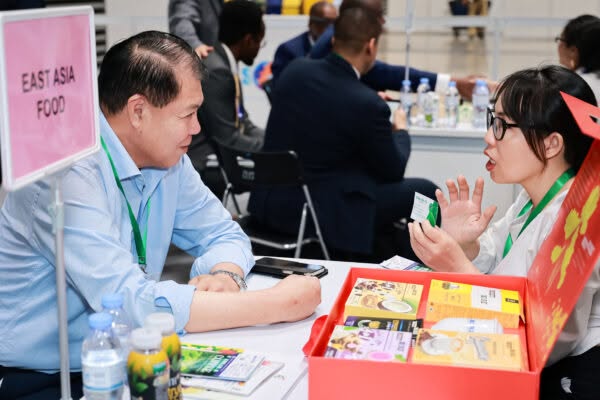
Among the participating businesses are A Chau Lien Imports and Export AB and East Asian Food AB, both of which will return to VIS for the third consecutive year.
Lagerqvist AB will participate for the first time, further broadening the composition of the Swedish business delegation and expanding its food distribution network.
The return of companies that have attended VIS several times, together with the participation of new businesses, shows that VIS is more than a promotional event or a venue for initial introductions. It is gradually becoming a practical sourcing channel that enables importers to discover new products and helps Vietnamese goods gain access to Nordic markets.
Returning Participants Reflect VIS’s Practical Effectiveness
A company’s decision to return to the fair for several consecutive years carries greater significance than one-time participation. It shows that the meetings held at VIS have generated sufficiently clear commercial value for importers to continue investing their time, resources and attention in the Vietnamese market.
Through the previous two editions, Swedish businesses have met producers directly, sampled products and discussed pricing, packaging, product specifications and distribution potential in the Nordic region.
Connections made at previous VIS events have led to the introduction of several new Vietnamese products into Nordic markets, including frozen bread, sticky rice with shrimp wrapped in lotus leaves, and ST25 rice.
More recently, the import portfolio has continued to expand to include cassava, green papaya and frozen crab soup, as well as products strongly associated with Vietnamese flavors such as dracontomelon juice and eight-treasure lotus sweet soup. It also includes rice varieties aligned with healthy eating trends, such as red cargo rice, purple brown rice and upland sticky rice.
This diversity shows that opportunities for Vietnamese food products in the Nordic region are no longer limited to traditional export items. Market potential is expanding into processed foods, convenience meals, ingredients for restaurants and products that combine nutritional value, natural origins and Vietnamese culinary identity.
From Traditional Products to New Value Propositions
Vietnamese food enjoys strong advantages in terms of ingredient diversity, distinctive flavors and cultural depth. Dracontomelon juice, eight-treasure lotus sweet soup and sticky rice with shrimp wrapped in lotus leaves are more than just food and beverage products. Each carries a story about ingredients, regions and Vietnamese culinary traditions.
Meanwhile, red cargo rice, purple brown rice and upland sticky rice demonstrate the potential to connect traditional values with emerging consumer trends.
Consumers are increasingly interested in minimally processed foods, natural ingredients, grain diversity and products with a clear sense of origin. This presents an opportunity for Vietnamese businesses not only to sell a product, but also to introduce a distinctive value proposition.
However, for a traditional dish or ingredient to become a commercial product in the Nordic market, businesses need to view it from the perspective of importers and local consumers.
Products must offer consistent quality, suitable packaging formats, clear information and straightforward usage instructions. For frozen foods, convenient storage and preparation are particularly important. For retail products, packaging should help consumers quickly understand what the product is, how it should be used and why it is worth choosing.
VIS provides an opportunity for producers and importers to discuss these issues directly, rather than requiring Vietnamese businesses to guess market demand from afar.
The Appeal and Effectiveness of the Business-Matching Mechanism
Vietnam International Sourcing does more than provide a space for Vietnamese enterprises to showcase their existing products. Its greater value lies in directly connecting Vietnam’s manufacturing capabilities with the specific sourcing needs of international buyers.
At VIS, businesses can receive direct product feedback, identify appropriate distribution channels and better understand what adjustments are needed before entering the market. Importers, meanwhile, can meet multiple producers during a single trip, evaluate products directly and discover new items that may not yet be available in their home markets.
The third consecutive participation of A Chau Lien Imports and Export AB and East Asian Food AB demonstrates the attractiveness and effectiveness of this business-matching mechanism.
Lagerqvist AB’s first-time participation also shows that VIS continues to expand the network of Swedish businesses interested in sourcing food products from Vietnam.
VIS 2026 is therefore not only a venue for showcasing products, but also a place where new business ideas can take shape.
A traditional dish can be developed into a convenient frozen product. A specialty rice variety can be positioned around healthy eating trends. An ingredient that is familiar in Vietnam can become a new product for Nordic restaurants or consumers.
From Business Meetings to New Markets
Results from previous VIS editions show that export opportunities can sometimes begin with a very specific conversation. However, moving from an initial meeting to actual market entry requires preparation, adaptability and persistent follow-up with partners.
By organizing the Nordic business delegation to attend VIS 2026, the Vietnam Trade Office in Sweden continues to act as a bridge between importer demand and the capabilities of Vietnamese enterprises.
The return of existing partners and the participation of new companies indicate that further opportunities are continuing to emerge for Vietnamese food products in Nordic markets. Each product can find its own path to market if it is connected with the right partner and developed in line with market demand.