BUY VIETNAM THIS MONTH
Grando, aluminium
Lagom, recycled products
Boss Group, aluminum and metal construction products
Carilas, fruits & juice
Bie, aluminum
Havigo, dried fruits
Megahome, household goods
Lavite, foods and health supplements
Viet Phap, aluminium
Viet Y, aluminium
HEADLINES
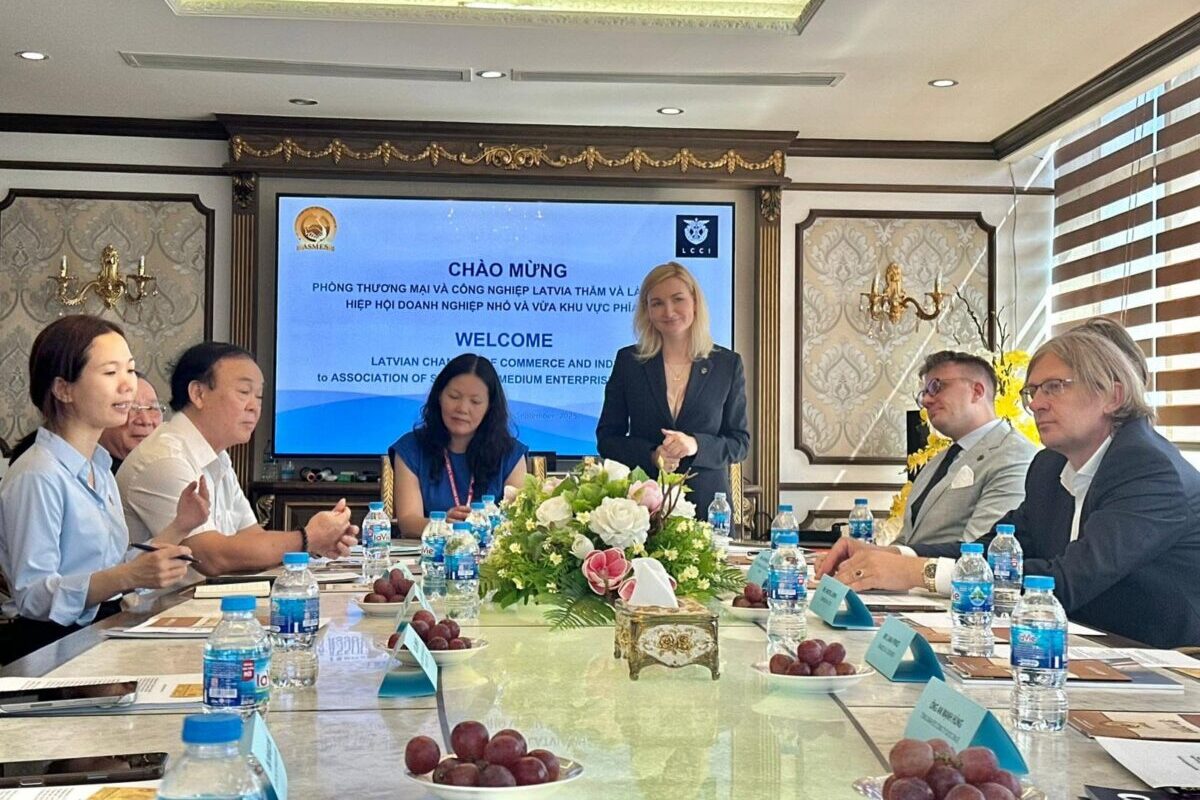
Amid the continued growth of Vietnam’s Industry and Trade sector, the Vietnam Trade Office in Sweden has contributed to market expansion, business connectivity and investment attraction.
Despite persistent challenges to global trade from geopolitical tensions, protectionism and the greening of supply chains, Vietnam’s Industry and Trade sector maintained positive growth momentum in the first half of 2026. Beyond impressive import-export figures, the sector’s achievements were also reflected in the expansion of market opportunities, more effective utilization of new-generation free trade agreements and significant innovation in trade promotion activities.
At the forefront of this process is Vietnam’s network of overseas Trade Offices, which directly connects businesses, monitors market developments, provides policy advice and accompanies Vietnamese enterprises in their efforts to enter international markets.
To discuss the results achieved and directions for developing Nordic markets in the coming period, Industry and Trade Newspaper spoke with Ms. Nguyen Thi Hoang Thuy, Commercial Counsellor of Vietnam in Sweden, concurrently responsible for Denmark, Norway, Iceland and Latvia.
Expanding Market Space and Diversifying Partners
Reporter: Looking back at the first six months of 2026, how do you assess the key achievements of the Industry and Trade sector, particularly in import-export activities, market development and international economic integration? In your view, what were the most significant developments in trade promotion and market expansion?
Commercial Counsellor Nguyen Thi Hoang Thuy: Looking back at the first six months of 2026, the Industry and Trade sector maintained positive growth momentum despite continued impacts from geopolitical conflicts, protectionist trends and increasingly stringent requirements related to the environment, emissions and traceability.
Total import-export turnover reached nearly USD 550 billion, up more than 27% year on year, of which exports exceeded USD 266 billion. Processing and manufacturing continued to account for a large share of export turnover, demonstrating that Vietnam’s production capacity and position in international supply chains continue to strengthen.
In terms of international economic integration, an important achievement lies not only in making effective use of existing FTAs, but also in proactively expanding market space and diversifying partners.
The conclusion of negotiations on a free trade agreement between Vietnam and the European Free Trade Association, EFTA, represents an important step forward, opening up additional access to high-purchasing-power markets while creating new opportunities for cooperation in technology, innovation, clean energy and sustainable development.
In trade promotion, a notable shift has been the move toward greater depth and substance. Activities are evolving from simple promotion and participation in trade fairs toward proactive supply-demand matching, bringing international importers and distribution systems directly to Vietnam to assess production capacity, meet local companies and explore long-term cooperation opportunities.
Vietnam International Sourcing, VIS, is a clear example of this new approach. Through exhibitions, business matching, specialized forums and company visits, VIS is gradually becoming a platform for international buyers to access Vietnamese supply sources, while helping domestic enterprises better understand market requirements, strengthen their capabilities and participate more deeply in global supply chains.
Alongside this transformation, the role of Vietnam’s overseas Trade Offices is receiving greater attention and assuming increasing importance in market development. The Trade Office network is clearly shifting from a supporting role toward one of building connections and opening pathways for Vietnamese goods.
Reporter: Within the broader growth of the Industry and Trade sector in the first half of 2026, how has the Vietnam Trade Office in Sweden, concurrently responsible for Denmark, Norway, Iceland and Latvia, contributed to maintaining export growth, expanding markets and effectively tapping opportunities in the Nordic region? Could you share some results that demonstrate these contributions?
Commercial Counsellor Nguyen Thi Hoang Thuy: In the first six months of 2026, Vietnam’s exports to key markets covered by the Trade Office continued to record strong growth.
Exports to Sweden increased by 19.6%, Denmark by 29.9%, Norway by 47.2% and Latvia by 36.9%. These are positive results given that the Nordic region has very high requirements regarding quality, environmental standards, traceability and sustainable development.
Within this overall performance, the Trade Office has promoted its role as a focal point for market development by proactively researching demand, providing information and policy alerts, identifying and verifying partners, connecting businesses and helping resolve difficulties encountered during market entry.
At the same time, the Trade Office has organized and brought numerous Nordic business delegations to Vietnam to assess the investment and business environment, evaluate production capacity, and meet local authorities, industry associations and companies, thereby generating concrete trade and cooperation opportunities.
The effectiveness of these activities is reflected not only in export growth, but also in expanding investment relations.
By the end of the first half of 2026, Sweden, Denmark, Norway, Iceland and Latvia had 359 investment projects in Vietnam, with total registered capital of approximately USD 4.44 billion.
Notably, many Nordic investment projects are in sectors where the region is a global leader, including technology, clean energy, green manufacturing, the circular economy and sustainable development, all of which align closely with Vietnam’s direction for transforming its growth model.
These results demonstrate the Trade Office’s increasingly prominent role in connecting markets, attracting high-quality resources and converting cooperation potential into tangible outcomes, thereby contributing to more substantive and sustainable trade and investment relations between Vietnam and the Nordic region.
Building Competitiveness for Vietnamese Businesses
Reporter: As Nordic markets increasingly impose stringent requirements on sustainable development, green transition and traceability, what should Vietnamese businesses prepare in order to make effective use of EVFTA opportunities and enhance their competitiveness in the region? How will the Trade Office support them in this process?
Commercial Counsellor Nguyen Thi Hoang Thuy: In the Nordic region, sustainability is no longer merely an added-value factor. It has become a condition for products to enter and maintain their position in the market.
In addition to quality and price, importers increasingly pay attention to the origin of raw materials, emissions levels, packaging recyclability, labor conditions and corporate responsibility throughout the supply chain.
This trend has become even more evident as the EU implements the Carbon Border Adjustment Mechanism, CBAM, from early 2026, new packaging regulations from August 2026 and the EU Deforestation Regulation, EUDR, for certain product groups from the end of 2026.
Vietnamese businesses therefore need to view green transition as part of their business strategy rather than simply responding when customers demand it.
First, businesses must fully understand rules of origin in order to utilize EVFTA tariff preferences. At the same time, they should develop transparent traceability systems, control input materials, measure emissions and invest in technology, clean energy and environmentally friendly packaging.
International certifications should be selected according to the specific sector and importer requirements, rather than pursued indiscriminately.
Another important requirement is thorough research into individual market segments and the development of long-term relationships with partners.
Although Nordic markets are relatively small in population, they have high purchasing power and place strong emphasis on reputation, transparency and supplier reliability. Businesses that meet these requirements can not only sell in one country, but may also gain access to broader distribution systems and supply chains across the EU.
The Trade Office will continue supporting businesses by providing updates and early warnings on new regulations, advising on market requirements and rules of origin, verifying partners, and connecting Vietnamese companies with importers, distribution systems and Nordic supply chains.
The objective is not merely to help businesses secure more orders, but more importantly to help them gradually strengthen their capabilities, meet green standards and establish a sustainable position in Nordic markets.
Reporter: In the second half of 2026, what tasks and solutions will the Vietnam Trade Office in Sweden prioritize in order to further expand markets, support businesses, make effective use of FTAs, and contribute to export growth and the broader development targets of the Industry and Trade sector?
Commercial Counsellor Nguyen Thi Hoang Thuy: In the second half of the year, our priority is to shift strongly from activity-based promotion toward targeted support that identifies specific partners and follows cooperation through to concrete results.
In the immediate term, we are focusing on organizing a Nordic business delegation to attend Vietnam International Sourcing, VIS 2026, combined with B2B meetings, visits to production facilities, seaports and logistics systems, with the aim of generating concrete opportunities for orders, investment and supply-chain cooperation.
In addition to VIS, the Trade Office will coordinate with relevant agencies, associations and partners to organize Nordic business delegations to attend Vietfish 2026 and Vietnam Foodexpo 2026.
These delegations will not only seek supplies of Vietnamese seafood, agricultural products and processed foods, but will also introduce advanced Nordic technologies, equipment and solutions for aquaculture, seafood processing, food production, energy efficiency, emissions reduction and quality management.
Through these activities, the Trade Office aims to promote two-way cooperation by linking trade with technology transfer, investment and value-chain upgrading.
The Trade Office will also continue to closely monitor market developments and provide early updates and warnings regarding green standards, traceability, packaging and supply-chain responsibility.
At the same time, we will support businesses in selecting suitable products, market segments and partners, making effective use of the EVFTA and proactively preparing for new opportunities arising from the Vietnam-EFTA Free Trade Agreement.
Reporter: Thank you very much for the interview.
Alongside export promotion, the Trade Office will step up efforts to attract high-quality Nordic investment projects in clean energy, green technology, logistics, the circular economy and sustainable manufacturing.
The goal is to turn information into opportunities, and connections into orders, investment projects and substantive technology partnerships, thereby helping expand markets and improve the quality of growth in Vietnam’s Industry and Trade sector.
OTHER NEWS
Sweden imported from Vietnam
| Products | 5M/2025 | 5M/2026 | Change (%) |
|---|---|---|---|
| All products (USD) | 510,358,227 | 618,652,871 | 21.22 |
| Fish and crustaceans, molluscs and other aquatic invertebrates | 13,933,177 | 13,363,939 | -4.09 |
| Plastic products | 7,979,854 | 8,611,344 | 7.91 |
| Rubber | 343,123 | 203,112 | -40.80 |
| Bags, purses, suitcases, hats, umbrellas | 12,318,278 | 10,108,325 | -17.94 |
| Products of rattan, bamboo, sedge and carpet | 3,513,805 | 4,027,403 | 14.62 |
| Wood and articles of wood | 12,756,388 | 16,189,512 | 26.91 |
| Textiles and garments | 55,559,146 | 65,130,063 | 17.23 |
| Footwears, parts of such articles | 34,516,428 | 41,208,770 | 19.39 |
| Materials for textiles and garments, and footwares | 2,089,838 | 2,311,811 | 10.62 |
| Ceramic products | 578,881 | 683,114 | 18.01 |
| Articles of iron or steel | 32,611,707 | 21,659,948 | -33.58 |
| Other metals and products | 1,174,175 | 962,069 | -18.06 |
| Computers, electrical products, part thereof | 63,651,423 | 100,999,771 | 58.68 |
| Telephone sets, parts thereof | 152,616,431 | 181,016,495 | 18.61 |
| Machinery, mechanical appliances, equipment, parts thereof | 46,698,005 | 52,179,124 | 11.74 |
| Toys, sports equipment and parts | 4,979,089 | 8,625,965 | 73.24 |
Sweden exported to Vietnam
| Products | 5M/2025 | 5M/2026 | Change (%) |
|---|---|---|---|
| All products (USD) | 214,091,826 | 187,430,298 | -12.45 |
| Other petroleum products | 1,606,076 | 2,683,075 | 67.06 |
| Chemical products | 5,550,813 | 5,382,051 | -3.04 |
| Pharmaceutical products | 74,701,566 | 56,635,450 | -24.18 |
| Plastic materials | 1,175,183 | 1,861,698 | 58.42 |
| Plastic products | 2,798,111 | 4,452,836 | 59.14 |
| Wood and articles of wood | 2,627,055 | 1,200,517 | -54.30 |
| Paper products | 24,630,269 | 32,088,185 | 30.28 |
| Iron or steel | 7,570,056 | 9,483,118 | 25.27 |
| Articles of iron or steel | 5,103,437 | 6,070,887 | 18.96 |
| Computers, electrical products, part thereof | 2,368,179 | 528,560 | -77.68 |
| Telephone sets, parts thereof | 0 | 0 | - |
| Other machinery, equipment, tools and spare parts | 53,876,032 | 37,849,319 | -29.75 |
| Other commodity | 32,085,048 | 29,194,603 | -9.01 |
Denmark imported from Vietnam
| Products | 5M/2025 | 5M/2026 | Change (%) |
|---|---|---|---|
| All products (USD) | 170,406,350 | 217,460,810 | 27.61 |
| Fish and crustaceans, molluscs and other aquatic invertebrates | 17,262,994 | 18,102,074 | 4.86 |
| Coffee | 5,711,376 | 4,626,325 | -19.00 |
| Plastic products | 10,477,660 | 11,306,510 | 7.91 |
| Bags, purses, suitcases, hats, umbrellas | 4,262,717 | 9,145,437 | 114.54 |
| Products of rattan, bamboo, sedge and carpet | 2,729,887 | 2,739,100 | 0.34 |
| Wood and articles of wood | 13,567,326 | 14,474,817 | 6.69 |
| Textiles and garments | 26,315,344 | 24,473,329 | -7.00 |
| Footwears, parts of such articles | 12,064,880 | 13,366,751 | 10.79 |
| Ceramic products | 2,958,105 | 2,005,305 | -32.21 |
| Articles of iron or steel | 10,632,049 | 34,757,688 | 226.91 |
| Other machinery, equipment, tools and spare parts | 13,379,380 | 15,758,731 | 17.78 |
| Electric wires and cables | 10,839,912 | 16,928,485 | 56.17 |
| Transport vehicles and spare parts | 3,093,441 | 4,765,499 | 54.05 |
| Furniture products from materials other than wood | 9,295,856 | 12,927,509 | 39.07 |
| Toys, sports equipment and parts | 2,120,011 | 2,314,249 | 9.16 |
Denmark exported to Vietnam
| Products | 5M/2025 | 5M/2026 | Change (%) |
|---|---|---|---|
| All products (USD) | 103,196,505 | 171,361,624 | 66.05 |
| Fish and crustaceans, molluscs and other aquatic invertebrates | 11,097,178 | 8,780,534 | -20.88 |
| Milk and dairy products | 2,662,844 | 3,038,381 | 14.10 |
| Other food preparations | 4,999,362 | 6,809,439 | 36.20 |
| Chemical products | 9,954,223 | 9,154,956 | -8.03 |
| Pharmaceutical products | 9,533,625 | 9,689,620 | 1.64 |
| Plastic products | 5,896,506 | 7,517,167 | 27.49 |
| Materials for textiles and garments, and footwares | 417,649 | 508,644 | 21.79 |
| Iron or steel | 45,503 | 771,890 | 1,596.35 |
| Articles of iron or steel | 6,839,483 | 2,988,685 | -56.30 |
| Computers, electrical products, part thereof | 2,274,075 | 2,209,963 | -2.82 |
| Other machinery, equipment. tools and spare parts | 21,463,555 | 80,131,191 | 273.34 |
| Electric wires and cables | 889,811 | 831,005 | -6.61 |
| Other commodity | 27,122,691 | 38,930,149 | 43.53 |
Norway imported from Vietnam
| Products | 5M/2025 | 5M/2026 | Change (%) |
|---|---|---|---|
| All products (USD) | 63,574,337 | 79,509,489 | 25.07 |
| Fish and crustaceans, molluscs and other aquatic invertebrates | 5,140,312 | 7,027,219 | 36.71 |
| Fruits and vegetables | 1,428,724 | 2,166,513 | 51.64 |
| Cashew nuts | 3,877,974 | 5,172,883 | 33.39 |
| Plastic products | 1,218,584 | 729,260 | -40.16 |
| Bags, purses, suitcases, hats, umbrellas | 4,036,792 | 3,787,642 | -6.17 |
| Wood and articles of wood | 1,280,227 | 997,756 | -22.06 |
| Textiles and garments | 4,903,137 | 6,536,599 | 33.31 |
| Footwears, parts of such articles | 8,275,593 | 10,496,498 | 26.84 |
| Articles of iron or steel | 714,410 | 476,903 | -33.25 |
| Cameras, camcorders and components | 4,210,654 | 3,022,635 | -28.21 |
| Other machinery, equipment, tools and spare parts | 5,184,583 | 13,311,383 | 156.75 |
| Transport vehicles and spare parts | 6,016,964 | 9,108,458 | 51.38 |
| Furniture products from materials other than wood | 1,002,374 | 1,059,894 | 5.74 |
Norway exported to Vietnam
| Products | 5M/2025 | 5M/2026 | Change (%) |
|---|---|---|---|
| All products (USD) | 249,041,929 | 242,678,561 | -2.56 |
| Fish and crustaceans, molluscs and other aquatic invertebrates | 142,813,618 | 150,933,211 | 5.69 |
| Chemical products | 2,110,401 | 1,614,130 | -23.52 |
| Fertilizers | 18,952,740 | 14,695,621 | -22.46 |
| Articles of iron or steel | 3,116,144 | 4,369,604 | 40.22 |
| Other machinery, equipment. tools and spare parts | 56,585,442 | 39,422,811 | -30.33 |
| Other commodity | 25,463,584 | 31,643,184 | 24.27 |
OTHER NEWS
Norway Brings Advanced Aquaculture and Seafood Processing Technologies to Vietfish 2026
From August 19-21, 2026, a delegation of 11 Norwegian companies and organizations representing multiple segments of Norway’s seafood value chain will participate in the Vietnam Fisheries International Exhibition, Vietfish 2026, at the Saigon Exhibition and Convention Center, SECC, in Ho Chi Minh City.
Under the theme “From fjord to your value chain, Norwegian expertise shaping the future of Vietnam’s seafood industry,” the Norway Pavilion will showcase technologies and expertise aimed at improving productivity, product quality, animal welfare and environmental performance across the entire seafood production chain.
Genetics, Aquatic Animal Health and Nutrition
One of the key areas to be highlighted at Vietfish 2026 is aquaculture genetics and selective breeding. Benchmark Genetics will introduce breeding programs, genotyping and genomic selection tools for shrimp, pangasius, tilapia and various other aquatic species. The company currently supports more than 40 applied breeding programs in 16 countries, covering over 30 aquatic species.
Through selective breeding and genetic technologies, farmed species can achieve faster growth, higher survival rates, improved feed efficiency, greater disease resistance and better adaptation to environmental conditions. These solutions help farmers increase productivity, stabilize product quality and reduce environmental impacts.
Notably, on August 5, Benchmark Genetics Norway AS and Nam Viet Corporation, NAVICO, announced a long-term strategic cooperation agreement to develop an advanced selective breeding program for Nile tilapia in Vietnam. Benchmark Genetics will design the program, provide technical consultancy and support its implementation, with a focus on improving growth rates, feed conversion efficiency and resilience.
The two companies have completed the establishment of an optimally structured base broodstock population, marking the transition from the design phase to practical implementation. The cooperation will support NAVICO’s ambition to develop tilapia into a premium export product based on an integrated and sustainable value chain.
In aquatic animal health, PHARMAQ, a member of Zoetis, will present vaccines, pharmaceuticals and diagnostic solutions for fish. With more than 36 years of research and development experience in Norway, PHARMAQ currently offers 35 vaccine products and contributes to protecting approximately 90% of farmed salmon worldwide.
PHARMAQ has operated in Vietnam since 2008 and developed the world’s first vaccine specifically for pangasius. Its Alpha Ject Panga 2 vaccine helps prevent bacillary necrosis of pangasius and hemorrhagic disease, thereby contributing to reduced dependence on antibiotics.
The company currently has an office in Ho Chi Minh City, a laboratory in Can Tho and a team of more than 100 vaccination specialists. It is also expanding its solutions to tilapia and Asian seabass.
Skretting will showcase sustainable nutrition solutions for salmon, marine fish, tilapia, pangasius and shrimp. The company operates 19 production facilities globally, with annual output exceeding 3.6 million tonnes and feed solutions for more than 60 aquatic species.
In Vietnam, Skretting operates two factories in Tay Ninh, serving both the domestic market and South Asia. The facilities apply the Nutrace traceability system and international standards including ISO, GlobalG.A.P., BAP and ASC.
Automation and Industrial Marine Aquaculture Technologies
Norway will also present technologies for marine aquaculture and large-scale industrial farming, areas in which the country has accumulated decades of experience.
ScaleAQ provides cage systems, nets, mooring systems, feeding barges, sensors, underwater cameras and digital operating platforms for both marine and land-based aquaculture.
ScaleAQ Vietnam has operated since 2012 and has an office and manufacturing facility in Nha Trang with more than 200 employees. The factory has produced thousands of underwater cameras and feeding systems, as well as nearly 20 feeding barges for customers in Vietnam and international markets.
TechValue Norway will introduce design, engineering, electrical, automation and equipment-manufacturing solutions for aquaculture. In Vietnam, the company manufactures stainless-steel equipment including water filtration systems, tanks, troughs, piping and equipment frames, with its management team based in Vung Tau.
In seafood processing, Optimar will present robotic and automation systems for fishing vessels, aquaculture farms and processing plants.
The company’s El-Stunner electrical stunning technology has already been deployed at several leading shrimp farming and pangasius processing facilities in Vietnam, helping improve animal welfare and product quality.
At Vietfish 2026, Optimar is expected to showcase an automatic shrimp deheading machine and robotic technology for cutting pangasius gills.
Since 2025, the company has maintained a strategic partnership with TechValue Vietnam to provide 24/7 technical support and training services for customers in Vietnam and several other markets.
Increasing the Value of By-products and Completing the Production Chain
Fjell Technology Group will present solutions for fishmeal and fish oil processing, animal by-products, wastewater treatment and sludge drying.
With more than 45 years of experience, the company focuses on technologies that optimize production, reduce environmental impacts and improve resource efficiency.
In Vietnam, Fjell aims to provide tailor-made green solutions for converting seafood by-products into high-quality fishmeal and fish oil, reducing operating costs and shortening investment payback periods to approximately 1-2 years.
The Norwegian delegation also includes SalMar, the world’s second-largest salmon farming company, which supplies products to more than 50 countries and has maintained an office in Ho Chi Minh City since 2016.
Trapia will present a premium tilapia farming and processing model with full traceability. The company has held ASC certification since 2013, in addition to BAP and Halal JAKIM certifications.
The Norwegian Seafood Federation will participate with a focus on policy dialogue, sustainable development and international cooperation, including coordination with the Vietnam Association of Seafood Exporters and Producers, VASEP, and Vietnamese authorities.
The Confederation of Norwegian Enterprise, NHO, representing more than 34,000 member companies, will present its cooperation program with the Vietnam Chamber of Commerce and Industry, VCCI, on vocational training for high-tech aquaculture and large-scale industrial marine farming in Vietnam.
Technical Programs and Business Networking
The opening ceremony of the Norway Pavilion is scheduled for 10:30-11:00 a.m. on August 19, followed by “Norway Spotlight” sessions in which participating companies will directly present their stories, technologies and solutions.
Networking and business-matching activities will be organized at the end of August 19 and 20.
On the morning of August 20, a technical seminar entitled “Green and Sustainable Technology Solutions for the Aquaculture and Seafood Processing Value Chain” will take place in Convention Room B on the second floor of SECC.
The seminar will focus on selective breeding technologies, data-driven fish health management, vaccination to reduce antibiotic use, automation in shrimp and pangasius processing, value enhancement of by-products, technology applications for sustainable aquaculture, and the development of a highly skilled workforce.
On the afternoon of the same day, a panel discussion on value-chain linkages for the sustainable production of high-value fishmeal and fish oil will be held in Sunflower Room A on the third floor.
On August 21, the pavilion will be open to general visitors from 9:00 a.m. to 4:00 p.m.
Through Vietfish 2026, Norwegian companies and organizations aim to strengthen connections with Vietnamese partners, share expertise and explore cooperation opportunities in the development of high-tech, safe, traceable and sustainable aquaculture and seafood processing.
From “Green” to Competitive: Transformation Opportunities for Vietnam’s Textile and Garment Industry at VIS 2026
In the global textile and garment supply chain, sustainable development is no longer simply a commitment to social responsibility. The ability to use energy efficiently, control emissions, ensure traceability and continuously innovate is becoming a direct factor determining a supplier’s position in the value chain.
Vietnam’s textile and garment industry has built a strong manufacturing base, accumulated decades of export experience and developed an extensive network of international partners. However, advantages in scale, cost and delivery capability will become increasingly difficult to sustain without corresponding transformation capacity.
This is also one of the key messages from international buyers ahead of Vietnam International Sourcing 2026, VIS 2026.
As part of the Nordic business delegation organized by the Vietnam Trade Office in Sweden, H&M will return to VIS for the second consecutive year. The Group’s participation not only reflects confidence in Vietnam’s supply base, but also highlights profound changes in how global brands select their partners.
Price and Quality Are No Longer Enough
Competitive pricing, consistent quality and on-time delivery remain fundamental requirements. However, buyers today also want to know where raw materials come from, how much energy is used in production, how emissions are managed, and whether factories have the capacity to improve over the long term.
An H&M representative noted: “Sustainability and competitiveness are becoming increasingly closely linked.”
This assessment suggests that green transformation should not be viewed merely as a cost of complying with customer requirements. If implemented effectively, it can become a tool for reducing material consumption, saving energy, improving productivity and strengthening trust with business partners.
Companies with transparent data, clear emissions-reduction roadmaps and strong innovation capabilities will have a greater advantage in retaining orders and moving into higher-value segments of the supply chain.
Vietnam Has a Strong Foundation, but Needs to Upgrade Faster
H&M began sourcing from Vietnam in the early 2000s and currently works with 42 suppliers and 72 factories, involving more than 60,000 workers.
According to the Group’s representative, Vietnam is one of H&M’s most important sourcing markets globally. This reflects the country’s production capacity, accumulated experience and significant position in the global textile and garment supply chain.
However, scale alone does not guarantee a sustainable competitive advantage.
As requirements related to renewable energy, carbon emissions, circularity and traceability become increasingly stringent, businesses need to move beyond a mindset of merely “meeting standards” and instead proactively build new competitive capabilities.
The H&M representative believes Vietnam has substantial opportunities in areas such as renewable energy, industrial decarbonization, circular solutions, digitalization and workforce development.
These are not only environmental priorities. They also provide a foundation for businesses to improve productivity, reduce risks and strengthen their ability to adapt to market changes.
Green Transformation Must Go Hand in Hand with Value Chain Upgrading
If businesses continue to operate primarily in low value-added segments, meeting an increasing number of standards may become an additional cost burden.
By contrast, when companies move deeper into material selection, design, sample development, technological innovation and solution development for customers, sustainability capabilities become part of the product’s value proposition.
According to H&M, some of the greatest opportunities for Vietnam will come from shifting toward higher value-added production, making better use of trade agreements, promoting circularity, and investing in innovation and human resources.
This shows that green transformation cannot be separated from the broader upgrading of production models.
A factory may use energy efficiently, but if it remains entirely dependent on customer decisions regarding designs, materials and product development, it will still struggle to establish a differentiated position. Businesses therefore need to gradually gain greater control over higher-value stages of the supply chain.
VIS 2026 Connects Market Demand with Transformation Capacity
Vietnam International Sourcing is not only a venue for Vietnamese companies to showcase their products. Its greater value lies in bringing manufacturers closer to the actual requirements of global corporations and distribution systems.
At VIS 2026, businesses can directly discuss standards, technologies, materials, energy and the conditions required to participate more deeply in global supply chains with international buyers.
According to H&M, VIS serves as an important bridge that helps Vietnamese companies and international buyers build relationships, better understand each other’s expectations and engage in dialogue on broader industry issues.
By organizing the Nordic business delegation to participate in the event, the Vietnam Trade Office in Sweden is not only bringing buyers to Vietnam, but also helping communicate emerging trends and requirements from Nordic markets to the Vietnamese business community.
The Trade Office’s role therefore goes beyond arranging individual meetings. More importantly, it helps Vietnamese businesses understand market developments, identify capability gaps and find suitable partners for their transformation process.
From Market Requirements to a Driver of Development
Green transformation undoubtedly requires capital, technology, data and skilled human resources. However, delaying transformation also creates increasingly significant costs, including lost orders, reduced access to new customers and continued confinement to low value-added activities.
For Vietnam’s textile and garment industry, sustainable development should therefore not be viewed simply as an external requirement imposed on businesses.
It can become a driver for restructuring production, increasing value creation and building new sources of competitive advantage.
H&M’s return to VIS 2026 shows that international corporations continue to see substantial potential in Vietnam. However, the ability to turn that potential into long-term partnerships will depend on the speed of transformation and each company’s capacity to demonstrate concrete results.
In this new competitive environment, being “green” is no longer only about responsibility. It is becoming a capability that determines whether businesses can survive, grow and move further up the global value chain.
From VIS 2025 to VIS 2026: Expanding Vietnam–Nordic Cooperation
Connections established at VIS 2025 have provided a foundation for the Vietnam Trade Office in Sweden to continue bringing a Nordic business delegation to VIS 2026, further expanding cooperation.
From VIS Connections to Concrete Cooperation
The connections established at Vietnam International Sourcing 2025 have laid the groundwork for the Vietnam Trade Office in Sweden to continue organizing a Nordic business delegation to attend VIS 2026. From fashion and food to logistics, the return of previous partners and the participation of new companies indicate that VIS is gradually becoming a practical cooperation channel between Vietnam and the Nordic region.
In 2025, the Nordic business delegation organized by the Vietnam Trade Office in Sweden, concurrently responsible for Denmark, Norway, Iceland and Latvia, carried out a nearly two-week working program in Vietnam, with the Vietnam International Sourcing Fair as its central focus.
VIS not only enabled businesses to directly access Vietnamese suppliers, but also opened opportunities for more in-depth engagement with government agencies, local authorities, industry associations, seaports, factories and logistics partners.
The results of the visit showed that Vietnam–Nordic cooperation is expanding beyond traditional trade transactions to include supply chain development, investment, logistics and green transition.
In the fashion sector, H&M used VIS 2025 as an opportunity to engage with Vietnamese businesses and government authorities on supplier development, renewable energy use, emissions reduction and retail expansion. The Group continues to regard Vietnam as an important link in its global sourcing network, as well as a consumer market with substantial development potential.
In the logistics sector, discussions between the Port of Gothenburg and Vietnamese seaports, shipping lines, exporters and logistics organizations helped move the goal of establishing direct Vietnam–Nordic transport links from a general direction toward more concrete forms of cooperation.
Memoranda of understanding signed during and after the program have opened prospects for stronger port-to-port cooperation, the development of green logistics, and research into direct maritime routes between Vietnam and the Nordic region.
A direct shipping route would help reduce dependence on transshipment, shorten delivery times, improve supply chain stability and facilitate Vietnamese goods’ access to Nordic and wider European markets.
In the field of sustainable development, the participation of IKEA and H&M demonstrated that Nordic corporations are placing increasing emphasis on renewable materials, sustainable forest management, clean energy, circularity and traceability. These requirements not only set new standards for Vietnamese businesses, but also create opportunities to upgrade technology, improve production efficiency and participate more deeply in global value chains.
Vietnamese Products Move from Trade Fairs to Nordic Markets
Food companies are among the clearest examples of VIS’s commercial effectiveness. Through previous editions of the fair, a range of Vietnamese products have been selected by Swedish importers and introduced to the market, including bread, cassava, green papaya, frozen crab soup, sticky rice with shrimp wrapped in lotus leaves, and ST25 rice.
The product portfolio has also expanded to items aligned with healthy eating trends, such as red cargo rice, purple brown rice and upland sticky rice.
These results show that opportunities for Vietnamese food products in the Nordic market extend beyond traditional export items. Processed foods, convenience foods, ingredients for restaurants and products reflecting Vietnamese culinary identity all have potential if businesses are connected with the right partners and adapt their products appropriately to market requirements.
VIS allows importers to directly sample products and discuss packaging, specifications, pricing and distribution channels. This is an important step in helping Vietnamese businesses understand actual market demand instead of developing products based on assumptions from afar.
Affirming the Role of the Trade Office
Building on the foundation established in 2025, the Vietnam Trade Office in Sweden will continue organizing a Nordic business delegation to participate in VIS 2026.
H&M will return to the event for the second consecutive year. A representative of the Group said that its continued participation reflects confidence in Vietnam’s development prospects and a commitment to building a flexible, resilient and sustainable supply chain.
In the food sector, A Chau Lien Imports and Export AB and East Asian Food AB will participate in VIS for the third time, while Lagerqvist AB will attend for the first time. The return of previous participants indicates that the program has generated sufficiently concrete results for importers to continue seeking products and partners in Vietnam.
At the same time, the participation of new companies helps expand import and distribution networks and creates additional market opportunities for Vietnamese goods. The delegation list is expected to be further expanded with companies from a variety of sectors.
An international business delegation does not begin on the opening day of a trade fair, nor does it end when the event closes. Before the event, the Trade Office studies the needs of Nordic companies, identifies partners with cooperation potential and connects them with suitable Vietnamese businesses.
During VIS, the Trade Office organizes B2B meetings, market and site visits, and working sessions with government agencies, industry associations, factories and logistics facilities.
The post-event stage is particularly important. The Trade Office continues supporting document exchanges, product sampling, product adjustments and follow-up communications so that initial meetings can develop into orders, projects or long-term partnerships.
The role of the Trade Office therefore goes beyond simply bringing businesses to the fair. More importantly, it helps translate the needs of Nordic markets into concrete opportunities for Vietnamese enterprises.
VIS 2026 is scheduled to take place from September 3-5, 2026 at the Saigon Exhibition and Convention Center, SECC, in Ho Chi Minh City. The event combines exhibitions, sector-specific seminars and direct business matching between Vietnamese enterprises and international corporations, importers and distribution systems.
The value of VIS lies not only in the number of exhibition booths or business meetings. More importantly, the event connects different links in the value chain, from raw materials, production and sourcing to logistics, technology and sustainable development.