General Secretary and President To Lam’s ongoing State visit to Denmark is opening up new prospects for the two countries to jointly create new forms of cooperation and value built on a foundation of sustainability.
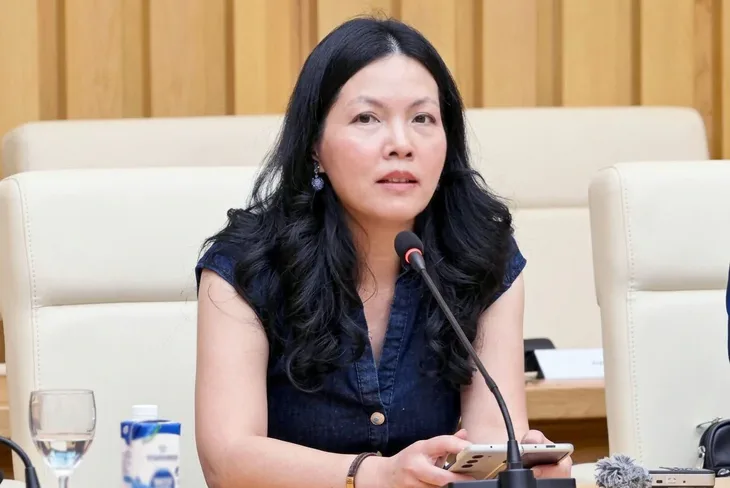
In an exclusive interview with Tuoi Tre, Ms. Nguyen Thi Hoang Thuy, Vietnam’s Trade Counsellor in Sweden, concurrently accredited to Denmark, Norway, Iceland and Latvia, emphasized that economic cooperation between Vietnam and Denmark is underpinned by a longstanding friendship and political trust built over many decades.
“This continuity and steady development is a distinct advantage of Vietnam–Denmark relations, providing a strong foundation of mutual trust, established cooperation mechanisms, experience in project implementation and a substantial presence of businesses from both countries,” Ms. Thuy emphasized.
Transforming the Approach to Cooperation: From Assistance to Co-Creation of New Value
Q: What are your expectations for this particularly significant State visit in terms of promoting cooperation and further deepening bilateral relations?
The State visit to Denmark by General Secretary and President To Lam is particularly significant, not only because it coincides with the 55th anniversary of diplomatic relations between Vietnam and Denmark (1971–2026), but also because the two countries are facing new opportunities for cooperation amid global economic uncertainties, while both place a high priority on sustainable development, science and technology, and innovation.
Vietnam–Denmark relations have undergone a fundamental qualitative transformation. This was clearly reflected in General Secretary and President To Lam’s policy address at the University of Copenhagen on October 19, in which he emphasized the need to transform the approach to economic cooperation, moving from assistance towards co-creation and generating new value for both countries.
I believe this is an extremely important direction for Vietnam–Denmark trade and investment cooperation in the coming period. I expect the visit to provide momentum for three major shifts.
First, shifting from increasing trade turnover to improving quality and added value.
Beyond expanding trade in traditional products, the two countries can strengthen cooperation in product development, processing technologies, design, logistics and distribution systems.
The objective should not simply be to sell more goods, but to enable Vietnamese enterprises to participate more deeply in higher-value supply chains.
Second, moving from cooperation on individual green projects towards the development of green industrial value chains.
Denmark has world-leading strengths in renewable energy, particularly wind power, energy-efficient technologies, maritime industries, environmental solutions and the circular economy.
Vietnam, meanwhile, has a large market, increasingly developed manufacturing capabilities and a strong need to transform its growth model.
Combining these strengths could create new industries and services, ranging from renewable energy equipment manufacturing and green logistics to sustainable food processing and emission-reduction solutions for industrial production.
Third, moving beyond attracting investment capital to attracting technology, knowledge and management capabilities.
The value of cooperation with Denmark lies not only in the volume of investment capital but also in the technological, environmental and corporate governance standards, as well as the innovation capabilities, that Danish investors bring.
These are essential factors for Vietnam to improve labour productivity and enhance its position in global value chains.
From High-Quality Investment to Upgrading Sustainable Value Chains
Q: Vietnam is focusing on attracting high-quality investment. What opportunities do you see for promoting Danish investment during this State visit?
The potential for investment cooperation between Vietnam and Denmark is considerable, particularly as Vietnam’s development orientation based on science and technology, innovation and green transition closely aligns with and complements Denmark’s strengths.
In renewable energy and industries supporting the energy transition, for example, Denmark has world-leading expertise in wind power, electricity system management, energy efficiency and emission-reduction technologies, while Vietnam has substantial demand for clean energy and green industrial development.
In my view, cooperation should not be limited to investment in power generation projects. It should expand into equipment manufacturing, supporting industries, logistics, technical services, operation and maintenance, thereby gradually establishing renewable energy supply chains in Vietnam.
Second, in high technology, semiconductors and innovation, Denmark has strengths in scientific research, quantum technologies, photonics, sensors and industrial electronics, which can complement Vietnam’s ambitions to develop its semiconductor industry.
Third, biotechnology, pharmaceuticals, medical devices and the food industry offer considerable potential for cooperation. Denmark’s research capabilities, technology and management expertise can be combined with Vietnam’s market, human resources and manufacturing capacity to develop high-value-added projects.
I expect the visit to strengthen Danish investors’ confidence, promote new investment projects and encourage corporations already operating in Vietnam to expand their activities and develop stronger linkages with domestic enterprises.
Q: Trade and import-export activities are also considered to have significant potential. What recommendations would you offer businesses seeking to capitalize on these opportunities?
Vietnamese enterprises need to shift from looking for markets for their existing products to studying market demand and developing products that meet specific customer needs.
They should proactively comply with the rules of origin under the EU–Vietnam Free Trade Agreement (EVFTA), as well as technical, environmental and traceability requirements.
At the same time, businesses should focus on building credibility and developing long-term partnerships in design, technology and product development to participate more deeply in value chains.
In the Danish market, sustainable competitive advantage does not lie in offering the lowest price, but rather in quality, reliability and the ability to meet the market’s high standards.
What matters most after the visit is translating high-level orientations and agreements into concrete projects, partnerships and business opportunities.
This is also the direction that the Vietnam Trade Office will continue to pursue: integrating trade promotion with investment, technology and industrial development, so that Vietnam–Denmark cooperation not only expands in scale but also generates greater added value and new competitive capabilities for the economy.
Energy Cooperation: A Key Highlight
On the occasion of General Secretary and President To Lam’s State visit to Denmark, one noteworthy area of cooperation is the exchange of a Memorandum of Understanding (MoU) on energy cooperation between Vietnam’s Ministry of Industry and Trade and Denmark’s Ministry of Climate, Energy and Utilities, linked to the Vietnam–Denmark Energy Partnership Programme for the 2026–2030 period.
Key areas of cooperation include long-term energy planning, renewable energy integration, industrial energy efficiency, offshore wind power and enhancing the flexibility of the electricity system.
According to Ms. Thuy, cooperation in renewable energy should focus not only on investment projects but also on developing supporting industries, transferring technology, training human resources and strengthening Vietnamese enterprises’ participation in supply chains.
Thank you very much for sharing your insights.
https://tuoitre.vn/viet-nam-dan-mach-tu-doi-tac-chien-luoc-xanh-den-dong-kien-tao-nhung-gia-tri-moi-100261020093148598.htm